ATTENTION, READERS in the 28 EUROPEAN VAT COUNTRIES: Because of the new VAT law, you probably can't order books direct from my site now. But that's okay -- just go to my Smashwords author page.
You can order PDFs (as well as all the other ebook formats) from there.
Showing posts with label general thoughts. Show all posts

Thursday, August 9, 2018

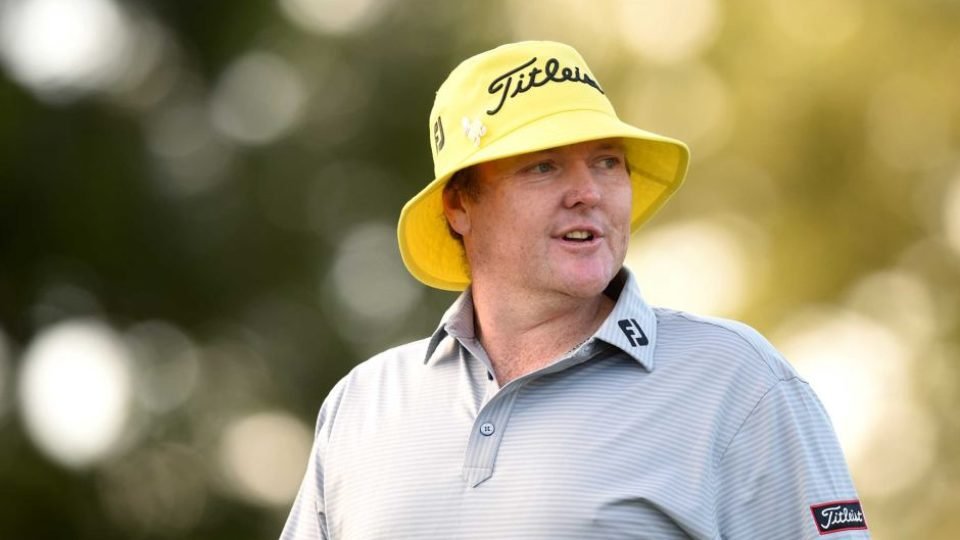
Remembering Jarrod Lyle

When Jarrod announced a few days back that he had stopped his cancer treatment, I decided not to mention it because I felt there was more to the story. I would wait until we knew something more solid.

Now we know. Jarrod quickly went into a coma and he passed Wednesday -- at least, it was Wednesday here in North Carolina. I suppose it was early Thursday in Australia. Either way, it's clear that he was in worse shape than the initial reports indicated.

Jarrod Lyle

How much has this touched people? You would expect the golf media to report his passing, but a quick Google search will reveal that wider media groups, ranging from People Magazine to CNN, picked up on this quickly, sometimes only minutes after his wife's tweet. Jarrod may not have had the celebrity status that many other pros do, but it's clear he will be missed by many many people from many walks of life.

He was only 36.

In case you haven't heard, a number of fundraising sites have already been launched to help care for Jarrod's wife and two daughters. His friend Tripp Isenhour set up a page at GoFundMe.com called "Jarrod Lyle's Girls" that you can be sure is a legit fund (it's a shame we have to worry about such things these days) where you can go if you want to help. I'm sure you'll find others as well.

I never met him, but I will remember Jarrod Lyle. My best wishes go out to his family and friends.

Sunday, May 13, 2018

Lightning in a Bottle

I'm going to talk about why Tiger's play seems a bit more erratic than most fans expect, but let's take a moment to appreciate what he did Saturday.

Tiger set at least two personal records. The 30 he shot on his first nine was the best nine he's ever shot by two strokes, and the 65 he shot is his best-ever round at THE PLAYERS.

Think about that, folks. A year ago Tiger wasn't even sure he'd ever be able to play, and yet Saturday he played a round that was better than anything the "Unbeatable Tiger" of the early 2000s was able to do. That's pretty special.

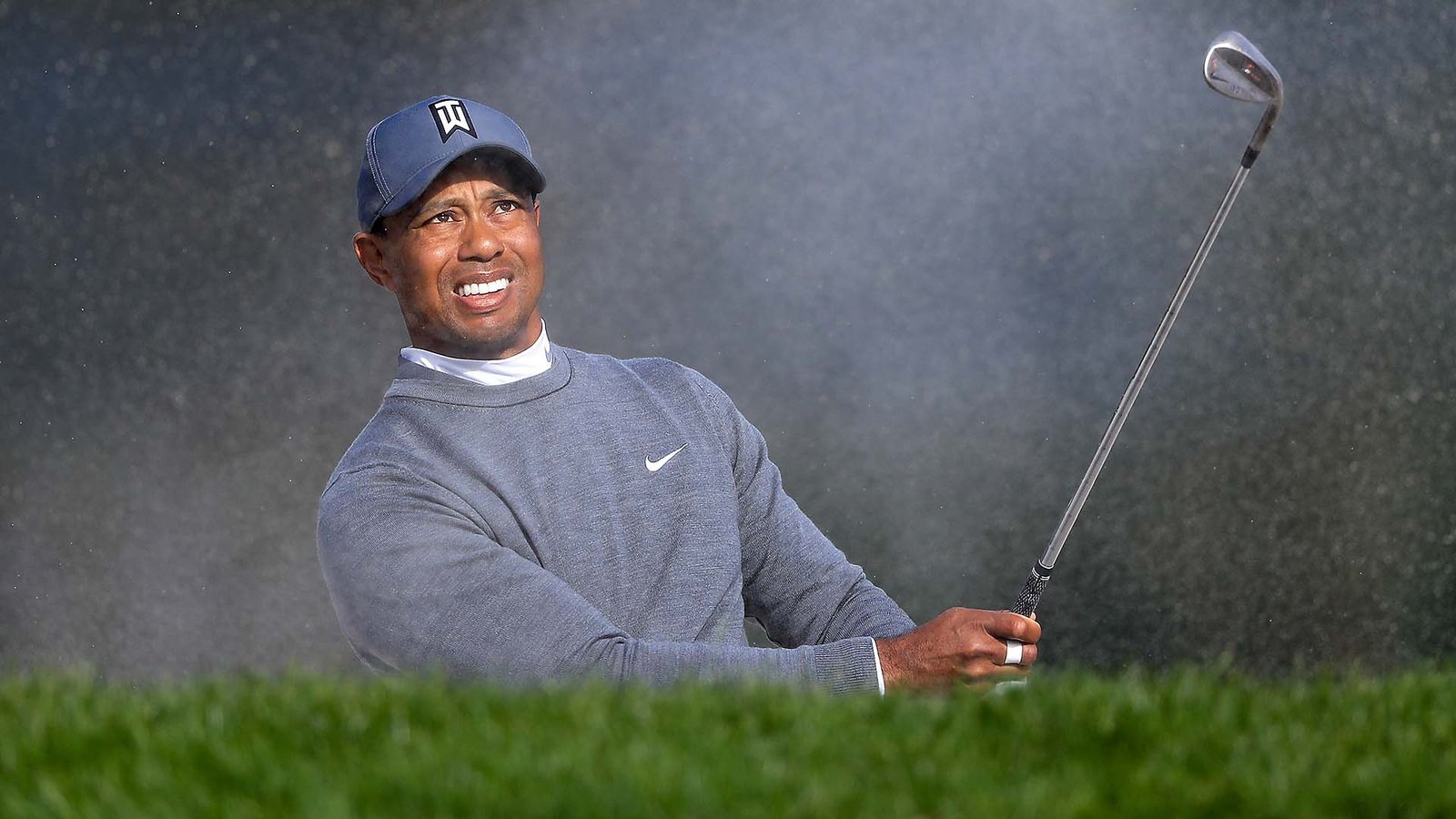
Tiger at THE PLAYERS

But it's that kind of special performance that makes fans wonder why Tiger is so erratic. Why does his game seem to be so hit-and-miss?

In one of my posts I said I didn't expect Tiger to really start winning for maybe 18 to 24 months. The reason -- and it's a reason that affects all kinds of athletes who have surgeries that affect their spine -- is how nerves heal.

I don't mean nerves as in a player's mental state. I mean the physical neural pathways that let the brain tell the muscles what to do.

Tiger mentioned early on that some of the players who had gone through back surgery told him that it had taken as much as two years before they felt "right." When Colts quarterback Payton Manning had neck surgery, it took the better part of two years for him to return to the field. And, as it turns out, there's a medical reason for that.

While doctors can predict how quickly muscles and bones will heal, they can't do the same with nerves. The pure and simple fact is that nerves are somewhat magical in their behavior. What western medicine describes as electrical impulses traveling through bundles of nerve fibers as they leap little gaps called synapses, eastern medicine describes as a mystical force called chi that flows through meridians or channels throughout the body. When you see those Chinese martial arts movies where masters battle each other with energy bursts, they're flinging chi at each other.

That may sound hokey to western ears, but the chi explanation leads to results that even western doctors have trouble arguing against. Nerves resist easy explanations because nerves march to their own drumbeat.

Here's some info from two different websites, this one on how nerves heal and this one on recovery from surgery. Let me give you a quick and simplified summary, snagged from that first site.
Regeneration time depends on how seriously your nerve was injured and the type of injury that you sustained. If your nerve is bruised or traumatized but is not cut, it should recover over 6-12 weeks. A nerve that is cut will grow at 1mm per day, after about a 4 week period of ‘rest’ following your injury. Some people notice continued improvement over many months.
Sensory nerves are more resilient than motor nerves and can recover sensation months or years after injury.
Motor nerves have a time limit for healing. The reason for this is a structure called the ‘motor endplate’, where the nerve joins into the muscle. If the motor endplate receives no nerve impulse for more than 18-24 months, it dies away and there is no longer any way that the muscle can be activated by the nerve. The muscle then whithers away. Thus surgical repair of motor nerves needs to happen within 12-18 months of the injury.
Now bear in mind that this is info on nerve healing in general, not nerve healing specific to athletes. A normal person who doesn't push his or her body to extremes on a daily basis will "feel normal" sooner than an athlete, simply because the demands on the nervous system are different.

But note that damaged nerves grow very, very slowly and that sensory nerves -- the nerves that give Tiger the "feels" he's been trying to relearn -- can take much longer to recover than the motor nerves that control the muscles. In a worse case scenario, the motor control can take up to two years to return (if it doesn't return by then, it probably won't return at all) but the sensory nerves can't even be predicted that THAT accurately.

That's probably the source of Tiger's erratic performance. While the motor activity in his muscles seems to be recovering quite quickly, the sensory nerves are taking their own sweet time. He feels a number of different things when he swings, and different groups of nerves function at different levels of consistency. Some days it's more hit-and-miss, while other days give him a more complete overall performance.

And then there are days like Saturday, where they all got their act together at the same time and Tiger catches lightning in a bottle.

The fact that we're seeing this sort of thing begin to happen more frequently is a good sign. It doesn't tell us how soon Tiger will return to his old form, but it certainly indicates that it WILL happen sooner or later.

And that is very good news for the golf world... but maybe not such good news for those young guns who want to see the old Tiger in action.

Saturday, May 12, 2018

Sometimes the Cliches Are Correct

I'm not going to take much time today. I just want to remind you that some things never change.

Webb Simpson on Friday

Webb Simpson has tied the records for lowest round (63) despite having a double-bogey on the card, and he's tied the record for lowest 36-hole score (-15). But how did he get this huge five-stroke lead that he'll take into the weekend?

The Strokes Gained stats tell you by how many strokes a player bettered the field average. And you may have heard that Webb's Total Strokes Gained for these two rounds was 14 (actually 14.287) strokes. And I know you've heard that the stats gathered by the Tour indicate that your driving is more important than your putting. Well, here's how Webb's game has stacked up through two rounds:
  • SG: Off the Tee, 1.031
  • SG: Approach to the Green, 0.600
  • SG: Around the Green, 3.576
  • SG: Tee-to-Green, 5.208
  • SG: Putting, 9.079
Pay attention, folks. This is one of the most impressive performances we've seen in a while, so let's see how he did it.

Webb's driving -- he's T5 with 78.57% -- accounts for a little more than one stroke over two rounds. You might think that's because his distance is 80th in the field with 273.1 yards, and his long drive of 317 only ranks T167. But his SG is 34th in the field with that single stroke, however, so all those long drives don't seem to be all that helpful to the big hitters when it comes to scoring.

Webb's GIR is T2 with 86.11% greens hit. He's second in the field, folks, yet that still accounts for only .6 of a stroke and his SG for approaches only ranks him 50th! So hitting greens doesn't seem to be all that important either.

Webb's scrambling stat is 60% (T38) and his sand saves stat is 50% (T28). That's despite his SG Around the Greens being second in the field! Most of his SG Tee-to-Green is because of his scrambling.

And yet -- AND YET -- his putting alone accounts for nine of that 14 stroke SG Total stat. It's nearly twice his SG Tee-to-Green stat and three times his SG Around the Green stat. Take note, my friends: Webb is Numero Uno in the field when it comes to putting, and because of that he'll carry a five-shot lead into the third round.

You can read all the stats you want, folks, but the old cliche is still true: You drive for show but putt for dough. Now let's see if Webb can keep it up for two more rounds.

Tuesday, April 10, 2018

Thoughts on Tiger and Lydia Ko's Problems

Though many fans worry about the swing problems Tiger and Lydia have gone through recently, their problems are neither serious nor permanent. Today I'd like to take a quick look at them.

Lydia Ko laughing

I'll start with Tiger, simply because he just came off a Masters performance that shocked many people. If you read my "5 to Watch" post about the Masters, you know I didn't include Tiger as a favorite. To quote myself:
After some personal debate, I have decided not to include Tiger in this list. While he has improved much faster than I expected and I won't be surprised if he does win, he doesn't make my "5 to Watch" list. Why? Because I still see him making strategic errors coming down the stretch in regular events, and I suspect he's still learning how his body reacts to adrenaline after the fusion. That can only be amplified in a major, and he hasn't even teed it up in a major in two years. You have to go all the way back to the 2015 Masters just to find a major when he played the weekend!

For the record, I do expect Tiger to contend this week and I expect getting a "major rep" will help him start winning the regular tournaments soon. But I feel that he's still one, perhaps two, majors away from being a serious favorite in the big ones. So, barring any wins before the US Open, I'm targeting Carnoustie as a realistic chance for a Tiger major.
While Tiger continued to have problems with his driver -- a chronic problem during his career, and one for which he continues to try new equipment -- he himself noted that the main problem was his iron play. He simply couldn't control his distance, and that's a primary symptom of uncontrolled adrenaline. This shouldn't have come as a surprise to anyone, for the exact reasons I gave in the quote above. The sheer joy of getting to tee it up in a major after so long must have played havoc with his adrenaline levels! And when he went out Friday with the potential of getting into contention... well, you know what happened.

And Tiger knows this as well. He has repeatedly said since he came back that he knows how to get into contention but, once there, he has to get the job done. But he can't do that until he gets his "feels" back. He's talking about controlling his adrenaline, pure and simple, because adrenaline changes how your body feels.

The fact that Tiger got to play the weekend should help him here. Unfortunately, the only way to learn to control your adrenaline in a major is to play more majors. But since major "feels" are more extreme than weekly event "feels," just having one major weekend under his belt should help him zero in on how his adrenaline levels affect his "new" body. I suspect we'll see more consistent performances in the regular events pretty soon. After that, it's just a matter of getting more major reps.

As for Lydia... with all the changes she's made to equipment and caddies and instructors and everything else, her problems could come from anything, right? I don't think so -- at least, not her current problems. I think most of the other changes have basically taken hold. No, the problem is much simpler yet nobody seems to have mentioned it.

Lydia has lost weight. Estimates run from ten to twenty pounds. And when you're as small as Lydia, that's a major body change.

Major enough to cause swing problems. Over the years we've seen players lose weight and then seen their games adversely affected.

I remember years ago when Joanne Carner, alias Big Momma, lost a sizable amount of weight. She never got skinny, but she was noticeably smaller. However, her game went south along with her weight. She lost her ability to consistently hit shots accurately, which was the strength of her game both as an amateur and a pro. I don't know if it was a conscious choice but she eventually gained most of her weight back.

David Duval also lost a noticeable amount of weight when he was challenging Tiger for #1, but he faced a different problem. David's game didn't suffer -- but his body did. Perhaps because the whole idea of weight training for golf was relatively new, David ended up with back problems that eventually ended his career. And he too eventually gained the weight back before he began to get better.

Why does weight loss affect a player's swing? The swing itself may not feel much different, but as arms and torso become smaller, the swing planes and angles created by those feels DO change. And then players are forced to relearn their swings, which means they're thinking more about mechanics than shotmaking, and... well, you can see how the problems begin.

Personally, Lydia looks a bit too thin to me. But whether you agree or not, she's definitely thin enough that her swing MUST have changed. Given the number of changes she's made to her swing over the past few years, I don't see this as a long-term problem. If her weight stays stable, she'll probably make the proper adjustments and get her game back on track -- although I don't know how quickly that will happen. Each case is different.

My point here is that not all swing problems the pros face stem from the kind of mechanical issues we typically blame them on. Emotional stress in one's personal life can cause inexplicable swing problems, but those problems can vanish very soon after the source of the stress vanishes.

A recent sickness can also cause problems. Jordan Spieth has been in a bit of a slump simply because it takes a while to completely recover from mono, which he had over the Christmas holidays. And Jimmy Walker's bout with lyme disease is still causing him some lingering symptoms.

The simple truth is that ANYTHING that interferes with your body's normal function can have a dramatic impact on your game. But that doesn't mean you need to make dramatic swing changes to fix it.

Sometimes you just need to give your body time to heal and adjust naturally. And that's all Tiger and Lydia need... TIME.

Saturday, March 10, 2018

What Must the Young Guns Be Thinking Now?

I just want to put some perspective on what we're seeing at Valspar this week. We seem to be missing the full picture because we're forgetting some important things.

Tiger at Valspar

For example, since Phil has been mentioned many times because of his win in Mexico, we need to remember that Phil isn't just overcoming the effects of age. Phil still has psoriasis and psoriatic arthritis and, although he is using medicine, both are incurable. My understanding is that he can still have flare-ups, even with treatment. So some of Phil's inconsistency could be the result of occasional pain.

Rory, Jordan and Henrik all missed the cut this week but this isn't just a matter of being in a slump. It's true that Jordan's coach Cameron McCormick said Jordan is just trying too hard right now, but we should also remember that Jordan that had a case of mono in December and -- I can say this from experience -- you feel rundown for quite a while, even after you're pronounced "well." I suspect some bad habits from that recovery time have worked their way into his game and it's a simple matter of working them out.

As for Rory and Henrik, both dealt with rib problems late last year and, even though both played well in their ET starts, conditions here in America are different from those in the Middle East. (Henrik didn't play as well in Malaysia either, his last ET event before coming here.) It's going to take some time to adjust to Bermuda grass, and that's why they're here early -- to get ready for Augusta.

Tiger, meanwhile, is playing the Honda and Valspar on the grass he's been practicing on since he started swinging again. You may have heard him say that he didn't know how he'd do at Bay Hill next week because he hasn't putted on bent grass in a while. But he's improving a little each week, and has realized that patience is his friend right now.

What exactly does all this mean to the young guns, who have made no secret that they'd like to face the "old" Tiger (and presumably the "old" Phil as well)?

Even though I expected Tiger to return to form if he was healthy, I didn't expect him to be at this point until much later this year. And while Tiger is playing well on these tough courses, he's certainly not ready for the shootouts he used to win with regularity. I suspect Tiger will be in pretty good form for Augusta -- as will Phil -- simply because both men tend to play well there, no matter what their games look like elsewhere.

But despite everything I've just written, I think the young guns should be a bit nervous -- not terrified, just nervous. JT ran the tables last weekend in Mexico but he still couldn't stop Phil from winning, and a confident Phil is a dangerous Phil. He now KNOWS that what he's been working on has him back in form, and he has Tiger to push him once again. Those two are already talking about inspiring each other, and these youngsters don't know how powerful their rivalry can be as they reassert themselves.

As for Jordan... the fact is this: An admittedly less-than-recovered Tiger just blitzed you by nine strokes on a course he hadn't seen in 22 years, when just nine months ago he wasn't even sure he'd play again. No matter the reason for your struggles, you can't feel good about this. The same goes for Rory -- under no circumstances should someone who spent a couple of years recovering from back surgery beat you by that many strokes.

Rex Hoggard noted that, after Tiger made a great play on Friday, Henrik glanced over at him and raised an eyebrow as if to say "I've seen this before." I can imagine Jordan feeling the electricity in the air and asking Henrik if it was this bad before, only to have Henrik smile and say, "No. It was worse."

Reportedly, Martin Kaymer recently asked Adam Scott at dinner if Tiger had really been that good... to which Adam simply laughed.

I don't expect Tiger to win this weekend, and I don't expect current leader Corey Conners to win either, although I expect both to hold their games together and finish well. This week will be a confidence builder for both players, but I suspect there's just too much talent too close to the lead for them to overcome it. This week, that is.

But Tiger and Phil are clearly sending this young group of superstars a message, and that message is:
We've been sharing our knowledge with you, trying to help you grow and become the players of tomorrow... but now we intend to teach you WHY we know these things. Now the hard lessons begin.
This isn't about intimidation, folks. I don't think Tiger or Phil gives a damn whether the kids are intimidated or not. Because, you see, you don't have to be intimidated to get beaten black and blue by our game.

And I think the young guns are just beginning to suspect that their dream of facing the legends wasn't a particularly smart one.

Tuesday, March 6, 2018

Some Thoughts on the Distance Debate

As I was watching Golf Central yesterday, I couldn't help but be surprised at some of the things that Geoff Shackelford, Jaime Diaz and Matt Adams said about the various statements that have come out from the USGA, the R&A, the PGA Tour and the PGA regarding the distance study. So I thought I'd note a few things that I believe have been forgotten in this discussion.


In case you haven't heard, the USGA and the R&A released a report Monday which they say shows an unusual jump in the distances golf balls carry on six of the seven tours that were studied. Most thought this report indicated consideration of new rules to "roll back" the golf ball. Here's a link to Golf Channel's post about that report, with a link to the report itself in it.

The first thing that surprised me was the panel's general belief that the statements from the PGA Tour and the PGA probably meant that any meaningful discussions would be stymied. Why? Because the statements made it pretty clear that the ruling bodies and the "playing bodies" had opposing views.

That makes no sense at all to me. We all know that each of the interested parties in this discussion has their own agenda. That's nothing new in any situation like this because the movers and shakers in any discussion have something at stake, and we know that they're always going to take stances to defend those stakes.

In my opinion, knowing what those stances are in advance make it easier to discuss things, not harder. If they made statements that indicated they didn't care one way or the other about the outcome, they would only be saying what they thought others wanted to hear and not what they meant. Knowing where everyone stands up front should make it easier for them to uncover the issues — the real issues — and perhaps make progress toward a solution.

Of course, it's unlikely that any real progress will be made toward a solution anytime soon. The reason? Because the only logical solution involves bifurcation of the rules, and to do that eliminates one of the things that really differentiates our sport from other sports. As it stands, amateurs and pros can compete against each other using handicaps, because handicaps take into account the things that differentiate an amateur's game from a pro's game.

You know, things like differences in driving distance.

But once you bifurcate the equipment, you eliminate even the possibility of a handicap. In fact, you eliminate the very thing which allows amateurs and pros to compete together. Because if they use different equipment, their games don't have enough in common to allow a usable comparison of their games. So the argument that bifurcation of the equipment is necessary to maintain the integrity of the game is actually a faulty one, because the ability of pros and amateurs to compete together is an integral part of our sport.

But that's only the beginning of the problems. Because the basic assumption — that rolling back the ball's distance will mitigate some of the challenges our game faces — is shortsighted.

One of the concerns is that classic courses are becoming obsolete because of the golf ball's distance. However, distance is the least of the problems. Most classic golf courses, having a smaller footprint as they do, don't have the space to handle a modern golf tournament. They weren't built to handle modern crowds, nor the parking that crowd will require, nor the rest of the infrastructure a modern event requires.

Things like grandstands, executive boxes, merchandising tents, and even sufficient trash cans and recycling receptacles to handle the waste a modern crowd creates take up far more ground space than the designers of those golf courses ever expected to need.

Rolling back the distance a modern golf ball travels will have absolutely no impact on those problems.

But can we even be so certain that rolling back the golf ball will have a major impact on the other issues that depend directly on the golf ball? By that I refer to the actual factors involved in the launching and landing of a golf ball. For the sake of this post, I'll ignore the agronomy issue, because hard and fast fairways certainly influence how far the ball travels once it lands.

Let's go back in time to 1997, Tiger's first year as a pro. That's the year the distance became something of an issue as Tiger rewrote the entire concept of the power game. This is before the introduction of the Titleist Pro V1, which debuted in October 2000. I pulled the driving distance of a few big-name pros that year from the PGA Tour's website.
  • Tiger Woods, 294.8 yards (2nd)
  • Phil Mickelson, 284.1 yards (5th)
  • Mark Calcavecchia, 279.1 yards (14th)
  • Ernie Els, 271.6 yards (52nd)
  • Mark O'Meara, 261.7 yards (153rd)
The reason for choosing Tiger and Phil is obvious, but perhaps the others are not so clear. Calc was in one of his better stretches of golf, winning three times from 1995 to 1998; Els was in a dominant stretch which spanned several years, and had won his second U.S. Open that year; and O'Meara won twice that year, with his two majors to follow in 1998. (In case you're curious, the longest driver on tour that year was John Daly at 302.0 yards.)

What's interesting here is that both Mickelson and Els were noticeably taller than Tiger, while Calc and O'Meara will roughly the same height. (Daly was the only one of this crew under 6 feet in height.) The changeover from persimmon drivers was nearly complete, with Davis Love being one of the last holdouts; 1997 was the last year any significant number of players used one.

Note that Woods was significantly longer than Mickelson — and Daly significantly longer than Woods, for that matter — although the major new ball technology had not been introduced yet. All three of these players used swings which were distinctively different from most other players — Woods used a very powerful, muscular swing while Daly and Mickelson both used swings which were much longer and more flowing than the standard tour swing. While it's possible to lay some of the credit for this distance on driver technology, it's clear that strength and flexibility were a much bigger influence on their results.

Look, I'm not saying that the distance golf balls travel these days is an unimportant consideration, nor that we can ignore the challenges it poses to the future of our game. The costs involved in maintaining longer golf courses are a real cause for worry. (As an aside, I suspect that indoor golf courses using simulators may become the next great source of growth for the golf industry. They have far less overhead, it doesn't take any more time to play a long course than a short one, and they are more easily located in population centers where they might attract casual players.)

But I do think the golf ball is receiving far more than its share of blame for modern golf's problems. And I hope the industry proceeds slowly as it pursues possible solutions because, if this is mishandled, we could harm the future of our game far more than we'll help it.

Saturday, February 24, 2018

Snedeker's Take on Tiger's Return

Randall Mell's post at golfchannel.com is about Tiger's play at the Honda, as seen by Brandt Snedeker. Sneds played with Tiger at Torrey Pines as well as at PGA National, so he's got some realistic perspective on Tiger's improvement so far this season.


Personally, I'll just note that Tiger's driving was better at Genesis last week than it was at Farmers, even though he didn't make the cut. And I think the fact that he doesn't have to hit driver on every hole at the Honda certainly helps him in PGA National's tough conditions.

But I really like Tiger's attitude right now. He's still looking at this return as a project that's going to take time. That may end up being the ultimate key to his success.

And if he keeps this incremental progress going, he may actually be a threat at Augusta this year. Wouldn't that be cool?

Saturday, February 10, 2018

The Debate Over Long Putters Continues

It's not going to go away, despite the rule change. Two Golfweek articles make that very clear.


The first article from January 7th talked about the continuing unrest on the Champions Tour over Scott McCarron and Bernhard Langer's usage of the long sticks, even though they don't anchor them. To quote the article:
“It’s a huge issue,” says Tom Pernice Jr., a five-time winner on the PGA Tour Champions. “A lot of players aren’t going to say anything about it to the press. It’s not fair. If you’re playing for a living, there’s a skill level in putting and that is being able to control the fulcrum point.”
Pernice then goes on to say that just allowing a player's hand to brush their shirt during the stroke makes a difference:
"In my opinion that’s enough of a reference to be able to control the fulcrum point."
I'm not at all sure I agree with that, since you could be brushing anywhere on your shirt. In fact, you could argue that holding both arms straight and rocking your shoulders with a standard putter also provides a 'reference point for the fulcrum point.' But that doesn't seem to bother anybody...

And the second article from February 9th (Friday) seems to make exactly the opposite argument as Pernice. Apparently Adam Scott's return to the long putter, though emboldened by Langer and McCarron's success, lasted exactly one tournament. Adam is once again using a short putter this week at Pebble Beach after shooting 71-74 to miss the cut at the Aussie PGA:
“I want to stick with the short putter,” Scott told The Forecaddie. “… I don’t just want to chop and change or I won’t get anywhere. I want to stick with it. I think in the long run it will be good.”
Look, folks. There's no silver bullet when it comes to putting. What works for one player won't work for another... and even though it works this week, it may not work next week. That's just part of being human rather than a machine.

But knowing that won't change anybody's mind, simply because it's easier to blame your lack of success on someone else using an unfair technique. I'm not calling Pernice a crybaby, but the USGA says that what Langer and McCarron are doing is legal, which means Pernice (and those other players he alluded to) could use it as well. If he chooses not to, that's his decision. But just because he chooses not to doesn't make it illegal. And I suspect that, if he tried it, he'd make the same discovery that Adam Scott made...

The unanchored long putter isn't a silver bullet. It still takes work to get good with it, just like any other technique. And maybe, just maybe, the difference in effectiveness between Langer and McCarron and the rest of the Tour has more to do with practice than anything else. The fact that Adam Scott couldn't make it work -- despite years of using an anchored long putter -- seems to back that up.

But as I said before, it's clear that this issue isn't going away anytime soon.

Monday, January 29, 2018

Two Promising Returns to Action

The Limerick Summary is delayed because the Farmers playoff resumes this morning at 11am ET. So I'm doing Tuesday's post a day early.

Tiger and Rory

It's been at least a year since both Tiger Woods and Rory McIlroy were healthy enough to make their presence felt on the world.stage. Now we've seen each play in two events -- Tiger in the Bahamas and at Torrey, Rory at Abu Dhabi and Dubai -- and 2018 looks promising for each.

Tiger's play at Torrey this past week has been -- and will continue to be -- analyzed ad nauseam. But the results are pretty clear to anyone willing to look. Despite problems with his full shots in general and his driving in particular, Tiger managed to make his first cut since the Windham in 2015. Who didn't make it? Here are a few names you may recognize:
  • Sangmoon Bae
  • Jhonattan Vegas
  • Ollie Schneiderjans
  • Wee Kim
  • Xander Schauffele
  • Rickie Fowler
In addition, his T23 (-3) finish tied Patrick Reed and beat Jon Rahm. Think about that -- with all his struggles, Tiger still managed a Top25 finish in his first official event back on a tough course, and at one point he was T16 at -5. (Had he held that score, he would have finished T12.) Not a bad showing!

Not only that, but he laid to rest most of the questions about his short game and putting. He also answered those who doubted he still had the will to grind, the desire to do his best no matter how hard the road. And now he has a couple of weeks to work on the things he learned this week (like bad driving!) before he tees it up at Riviera.

Yes, very promising.

As for Rory, he has a T3 and a runner-up finish in his two starts. That should end the questions about whether he's healthy or not. His game appears to be firing on all cylinders, and he -- like Tiger -- seems to have found his "happy place."

If any question remains unanswered, it's about his ability to close out tournaments... but I don't think that one will last too long. Rory has never been like Tiger -- he's more like Phil. He's streaky and tends to make the occasional bad decision that costs him the win. But he will make fewer of them as he gets back into the rhythm of a full schedule, just as Tiger will make fewer bad shots as he regains his feel for tournament golf.

It's so easy to forget how hard it is to be great, no matter what field you compete in. Tiger noted that Roger Federer picked up his 20th Grand Slam title this weekend at age 36, but 36 is old for a tennis player. Tiger isn't old for a golfer, and Rory even younger, but the challenges for all three are similar. There is always another challenger, one with a different set of skills and something to prove. No matter how talented you are, success is never as easy as it may look. Even the greats like Tiger and Rory need "reps" in order to reach their potential. January is just the beginning of their returns to greatness.

But I suspect it won't be long before the rest of the Tours wish both had stayed on the sidelines a bit longer.

Saturday, January 27, 2018

Tiger Takes a Successful First Step at Torrey

Maybe it wasn't the glorious showing that many of his fans hoped for. But when Tiger Woods made the cut at -1 after his second round, the roar from the gallery showed they were excited nevertheless.


I was thrilled as well. Tiger has made no secret that this week was about taking a first step toward the Masters. Making this cut goes a long way toward making that trip. And after two full rounds -- with the promise of two more -- I think we can make a few observations about his progress so far.

It certainly appears that his body is healthy and that he is in a good frame of mind, as evidenced by his interactions with the crowds and media both during and after his rounds. I think it also shows in his more realistic expectations at this point in his journey back. We aren't hearing the "I'm here to win" speech; rather, we're hearing his own uncertainty about how he can perform under pressure and his need to relearn what his body can and can't do. This is certainly different from his last attempts to regain his form.

And while his game is clearly rusty -- has he even been on a hill since his last surgery? -- it's also clear that he's made some good progress. His lag putting and short game were extremely good for a man who hasn't played four rounds at an official Tour event in nearly two-and-a-half years. His speed and general form are still looking good after a month of daily golf, even if his "sequencing" comes and goes under the pressure and adrenaline of competitive golf. That's to be expected.

But perhaps best of all, he showed that he is still capable of finding a way to score when his game isn't all that good. That tells me that he's in a good place mentally, and it's just a matter of time and practice before his confidence comes back. If he can make the cut at Torrey with the game we saw over the last two days, there's real hope that he can make it all the way back.

I'll be very interested to see how he plays over the next two days, now that the pressure of making the cut is gone and he can simply focus on trying to chase the lead. Will he catch it? I doubt it but that's not what's important at this point. What are his goals going forward?

Tiger has said it himself -- he needs to learn how his body responds on the weekend at a "real" tournament. Nick Faldo agreed. And over at ESPN Andy North said Tiger needed the opportunity to find a go-to shot, something he could only do during an actual tournament. These are all realistic goals.

Will he achieve them this weekend? Probably not... but he can make a good start toward them. And that's really all you can ask from a good first step.

Tuesday, January 9, 2018

The Golf Ball Debates Resume

Dustin Johnson's 432-yard "almost a hole-in-one on a par-4" drive at Kapalua's 12th hole Sunday has started the new round of debates over the modern golf ball and how far it flies. GC posted this piece by Randall Mell on Monday that sums up some of the issues.

I must admit that at times I find this all a bit humorous. The history of golf is filled with players who seemed to be ungodly long with a driver, regardless of the ball they used.

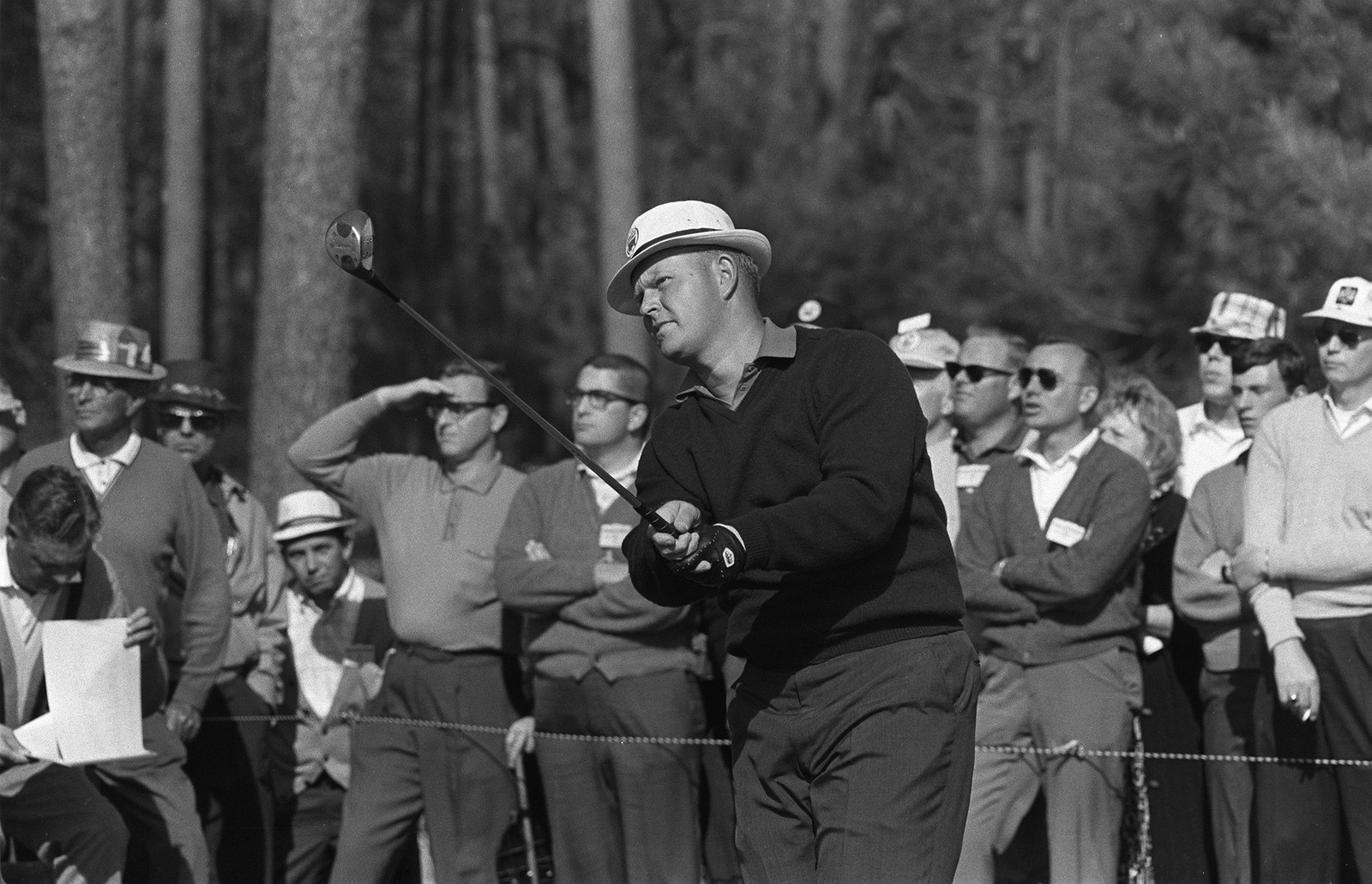
Jack Nicklaus in 1966

For example, in an article in The American Golfer (dated 7 May 1921) O.B. Keeler wrote:
BOB JONES is an extremely long hitter. He has been a long hitter since he was thirteen years old. At Merion, in the national championship of 1916, Bob being then fourteen, he drove some of the longest tee-shots in that tournament, and, incidentally, traveled thirty holes against Frank Dyer in a matter of four strokes under 4's, if my memory is not at fault—the best stretch of golf shot in that tournament. He hit one or two tee-shots of better than three hundred yards. [p7]
Hmmm... a 14-year-old Bobby Jones could hit one of those old Haskell rubber balls -- essentially a balata ball -- over 300 yards with a persimmon-headed, hickory-shafted driver that would have been about two inches or so shorter than the current standard. And Jones was only around 5'10", about Rory McIlroy's height. Interesting.

Even more interesting is an article Keeler wrote in the same magazine later that year, in the 17 December 1921 issue, the tenth in a series called Why These Fads and Fancies? titled simply Ballistics. Here is a short section of that article, which began on page 13 and continued on page 30:
Recently we have got the golf ball in our power in at least one direction—we have the wretched thing standardized. That is, it must not weigh more than a certain weight (1.62 ounce); and it must not be smaller than a certain diameter, which I think is that same amount in inches; while it can be as much lighter or as much larger as desired—which doesn't appear to be much.

It seems we were tending toward a pellet about the size of an old-fashioned quinine pill, with a soupcon of radium in it, or something to give it a range that would result in the scrapping of all our standard golf courses and making them over on the Great Plains of the Middle West or the Desert of Sahara, or somewhere where there was more room.

The Royal and Ancients and other golf arbiters decided something ought to be done about it—steps should be taken, resolutions adopted; measures taken, or something. It turned out to be measures; weights and measures, you might say. And now we have the standardized golf ball, with no especial sacrifice of power, velocity or range, if the advertisements may be credited.

As a matter of fact, they stopped the revision of the ball downward right about where it was; I think that a few brands were a shade smaller and a shade heavier than the present standard; but I do not recall a season with more punishment administered to long-hitting records than the past one.

So the golf courses are saved, it seems; and we moderate players won't have to battle our way with a drive and five screaming brassies to get in range of the eight hundred and nine hundred and thousand-yard holes, predicted not so long ago by the more excitable pessimists as the logical outgrowth of the smaller and heavier and higher-powered projectiles turned out year by year.

Six hundred yards will, for the nonce, remain the approximate limit — that is to say, a drive and two screaming brassies for the gentler players to get in pitching distance; for it generally is agreed that a brassie shot should not be expected to scream unless it travels more than one hundred and fifty yards.
Bear in mind, this was written in 1921. It laments the (at that time) extreme distances which the ball traveled -- note that a 600-yard hole was considered "the approximate limit" at that time, although there weren't many of them. Note that Keeler says that others before him have lamented that the situation would be even worse!

And in the modern day? A 2013 Golf Magazine article said there were 20 holes over 600 yards on the PGA Tour and included pictures of the ten longest, the longest being the 667-yard first hole at Firestone.

So, despite all the advances in golf ball design, club design, course architecture, agronomy and player size -- that last is rarely mentioned as a significant change, although I would expect 6'4" DJ to hit the ball a bit longer than most players who weren't that tall! -- despite all that, the longest hole on Tour was still only 60-some yards longer than in 1921. (Please note that, while there are longer holes in the world, they aren't par-5s.)

And other players besides Jones have been long hitters despite using "inferior" equipment. Jack Nicklaus -- the above photo comes from 1966 -- won the 1963 PGA Championship at the Dallas Athletic Club by two shots. In the long drive competition held on Wednesday that week, Jack won with a 341-yard drive. Like Jones, Jack used a balata ball and persimmon-headed driver, albeit with a steel shaft. (I found that info in both this USA Today article -- where I got the photo above -- and Wikipedia's article on the 1963 PGA.)

Don't misunderstand me. I'm not arguing either for or against how far the ball travels. Personally I'd like to see something done to keep the older courses in play. Longtime readers of this blog may remember a 2009 post called Why Not a Par 67 Course? where I suggested the (apparently) blasphemous idea that par is a relatively meaningless concept and we could set it at any number we chose. These days I don't think that would make any difference, simply because Tour events have become so large that those courses don't have enough room for all the tents and parking and such.

I'll leave those debates to the analysts and officials who get paid to debate such things.

I suspect the powers-that-be will have to put a lid on development eventually -- longer courses are simply becoming economically and ecologically unfeasible these days. But it seems to me that, when you consider just the basic issue of distance, the golf ball debate hasn't changed much in at least a century. The pros have always been cited as "proof" that the ball flies too far, while the average amateur can't even drive the ball 200 yards consistently.

Perhaps this says less about the equipment and more about our inability to make a simple swinging motion with a club.

But whatever else it means, I guess we can look forward to an increased battle over golf ball standards this year. And that's about par for the course.

Sunday, December 17, 2017

Will the Indonesian Masters Ever End?

Perhaps we'll have a winner by the time some of you read this, but -- for the third day in a row -- the Indonesian Masters was suspended due to dangerous lightning.

And I'm irritated.

Justin Rose

I guess this is a rant of sorts. I know that our game is subject to the weather because we play outdoors, but for some reason this week's delays seem less tolerable.

Maybe it was the video showing Justin Rose trying to tee off when a crack of lightning sounded in the middle of his backswing, right overhead, that bothers me. We expect that kind of activity to be noticed before it gets that close, don't we?

Perhaps it's because the event is halfway around the world from me, so I can't afford to stay up during an extended delay. Especially when I don't even know if play will resume.

At any rate, Justin Rose leads by five strokes after seven holes of his final round. Unless he just can't finish the round for some reason I don't see him losing this one. In fact, even if they have to throw out the final round (unlikely at this point) he was leading after the third round. I guess we'll find out soon enough if they're just delaying the inevitable.

And if so, that will be three wins in his last seven starts. Pretty amazing stuff.

If the round ever gets underway again. **sigh**

Saturday, December 2, 2017

Tiger at the Half

It's too soon to say Tiger is "back." But it's not too soon to question how we'll know he has truly returned. Today I'd like to look at a few things that can serve as indicators of Tiger's progress.

Tiger on the green

The first indicator is simply whether Tiger is painfree or not. We should divide this into two questions -- is he painfree now, and will he remain painfree? The answer to the first one is clearly YES. We know that Tiger played nine straight days of golf before teeing it up in the Bahamas, and he's no worse for wear. That's important because you can't stay painfree until you get painfree.

But one week won't answer that second question. Tiger has rarely played more than 15-18 tournaments a year, so I'm arbitrarily setting my sights on 8-10 events. That should be six months or so; if he's still good then, I think he passes this first test.

The second indicator is how consistently well he plays. I include mental improvement as well as mechanical improvement. We should expect some rust, no more than he's played in the last couple of years. And dealing with how his body handles adrenaline now, plus his ability to adjust quickly to conditions, should both be taken into account here.

Two rounds isn't a huge sample, but Tiger seems to be playing with very little rust. (THAT should certainly give the rest of the golf world some pause, given he's only had a month or so to practice.) In addition, he made some sound adjustments to his game on Friday, based on what he did Thursday, and most of those adjustments worked. Some were mechanical, many were strategic. So I'd also give him credit for this indicator -- at least this far into his comeback.

Third indicator -- how is he mentally on the weekend? Granted, he hasn't played the weekend yet -- but I don't think we'll be able to answer this one very soon, even if he wins this weekend. Even when Tiger played so well back in 2013, it was clear that his play on a majors weekend was not as good as it was at a regular event. This one could take a year or so before we have the answer.

However, if he can close out any tournaments over the next few months, that will certainly be a positive sign. Again, you have to be able to close out a regular tournament before you can count on closing out a big tourney.

Fourth indicator -- how well does he travel? To be honest, I hope he doesn't test this one until he has a few events under his belt. He was already struggling a bit before his trip to Dubai did him in back in February; I'd like to see him successfully complete a few events over the next few months before trying any long flights.

Finally, can he keep his own expectations in check? I really like his attitude right now. Some of the analysts have suggested that Tiger is sandbagging a bit, that he knows his game is better than he lets on.

But look, the hype is already in motion -- Tiger has gone from a 100-1 favorite at the Masters to a mere 15-1. Expectations for Tiger are always at two extremes. Either fans think he'll just instantly return to top form or -- as Frank Nobilo confessed -- he didn't really want Tiger to come back because he thought he wouldn't be able to play well and he didn't want to see the Big Cat as just a ceremonial golfer. Very few of us allow Tiger to just be human and give him the same freedom to fail that we want others to give us. After all, none of us is perfect!

I find it refreshing that Tiger has (perhaps) come to grips with his own mortality. I think that will stand him in good stead going forward.

So while the Masters odds are clearly examples of jumping the gun, the signs that Tiger will once again be a force on the PGA Tour are encouraging. And while I don't expect him to win this weekend, I do think the young bulls who idolized Tiger and wanted to compete against "the legend" should be thinking twice about what they asked for.

I know I plan to keep watching because I think they may live to regret that wish!

Sunday, November 26, 2017

Brad Faxon's Round with Tiger... and DJ and Trump, of Course

Brad Faxon wrote an article for Golfweek about his round with Tiger, DJ and the Prez. The article was published late Saturday, so I want to make sure you see it.


Faxon's comments on Tiger are interesting. Not so much because he echoes what everybody else is saying -- that Tiger is hitting it long (How long? Fax says Tiger was hitting it out there with DJ. I'll have to see that for myself) -- but just his overall impressions of Tiger's demeanor.

Here are the main comments that stood out to me:
Tiger looked great to me. He was happy and, more than anything, he’s finally pain-free. The issues he had with the back the last couple of comebacks seem to be gone. He looked effortless, he looked free, he had some power... I think more than anything, he looked at ease. He was not concerned about swinging hard and going at it with driver.
Those last couple of sentences are the ones I'm most happy to see. If Tiger has accepted his need to care for his back and not try to outdrive everybody, then he has a real chance to get back in the game.

Faxon notes that we still need to temper our expectations, that casual rounds like this aren't the same as competitive rounds. I agree. Still, this sounds like good news for us golf fans. And if Tiger has truly learned to accept his limitations, it could be REALLY good news.

I am now officially excited to see how he plays at the Hero this week.

Saturday, November 18, 2017

2018 LPGA Q-School Will Look More Like the PGA Tour Version

This is a big deal, so I'm linking you to a Golf Digest article that goes into more detail. But I'll try to summarize it here.

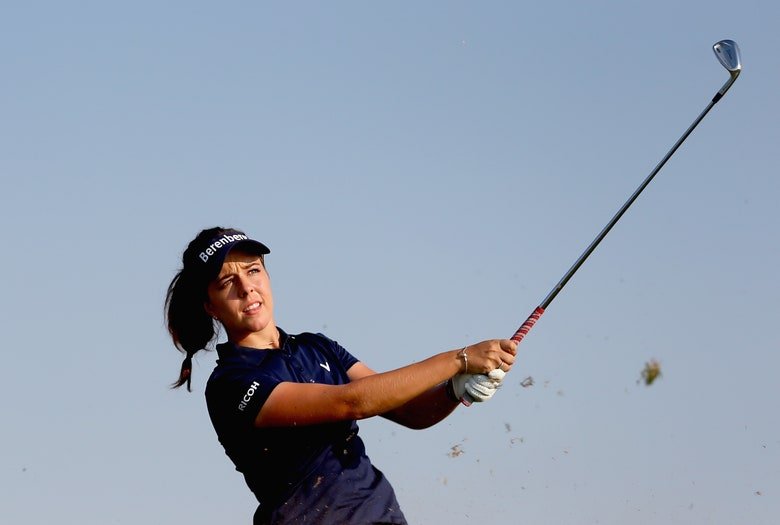
Georgia Hall

Currently the LPGA Q-School has three stages -- two stages of 72-hole stroke play followed by a third stage of 90 holes of stroke play (with a 72-hole cut). The field is made up of the top 15 and ties from the Symetra Tour, any players in the Rolex Rankings Top40 plus the 80 and ties who made it through Stage 2.

Starting next year, that's history.

LPGA commish Mike Whan says the new version will still have the first two stages BUT the final stage will be replaced by what he calls the Q-Series -- two 72-hole events in different places, separated by three days. There will be no cut and the scores will be added together.

There will also be a change in the field. Here's how Whan summed it up:
“When we go to [2017 Q School] stage three in a week, you'll probably have 80 or 85 players in that field that came from stage two,” Whan said. “In 2018, I'll bet that number will be somewhere around 20 to 30, maybe 20 to 25 that will come from stage two. So what that means is you can still go Stage 1, Stage 2, Q Series, LPGA card. But that will be a much tighter funnel and harder to do. The superstars of the time will still get through that, but generally speaking most players will get to stage two, play a year on the Symetra Tour and play their way on to the LPGA.”
The article breaks the new field down this way:
  • Roughly 25 players from Stages 1 and 2 of Q-School
  • Players ranked 101-150 on the LPGA
  • Players ranked 11-30 on the Symetra Tour
  • Top 5 collegiate players in the country (via the GolfWeek rankings)
  • Players ranked in the Top100 in the Rolex Rankings but not already on the LPGA Tour (that number has not yet been determined)
In other words, this will be much more like the new PGA Tour system that funnels players through the Web.com Tour, except the LPGA will use the Symetra Tour. While I understand this decision, I do think it puts some new responsibility on the LPGA.

Simply put, the Symetra Tour doesn't pay anywhere near the prize money that the Web.com Tour does. If the LPGA wants to make the Symetra Tour a viable alternative to the current Q-School, they need to find some way to raise the weekly purses on the Symetra Tour. Otherwise this change may backfire on them, as it's a much greater burden to play a full season of tournaments with minimal purses than to ante up the cash for a three-week Q-School.

But if the LPGA can solve that problem, this should help them better prepare the rookies for life on the LPGA Tour...

Although given the high level of play we've seen from rookies over the last few seasons, I can't imagine why they think that's needed.

Tuesday, October 31, 2017

Of Course We Have to Talk about Tiger!

But rather than rehash old news, I'll link you to GC's article about his announced return later this year and get on with my own thoughts on the matter.


To be honest, I'm not terribly surprised that Tiger plans to tee it up at the Hero. The course is tailor-made for a test of his health and it won't require any real travel for him. And he will have incredible control over his circumstances off the course as well as on, which may be even more important for a successful return. (Remember, Louis Oosthuizen has to carry a mattress with him when he travels.)

As many of you may remember, I questioned his ambitious travel schedule so soon after his last comeback. But perhaps he learned from that little mistake. Let's hope so. If he avoids long plane flights until his back has proven it can handle short ones -- he was sore after two rounds at Torrey last year -- and sticks to domestic tourneys for a few months to be sure he knows the difference, he just might make this comeback stick.

In my opinion, listening for his back's slightest twinge and minimizing his travel for the first few months are key for him. Because I believe this very firmly -- as long as Tiger Woods has that wonderfully strategic mind of his, he can be competitive if he's physically just half of what he used to be.

And if he's patient this time, I think he'll do better than half.

Wednesday, September 27, 2017

Some Thoughts on the Presidents Cup

I feel that I need to do a post on the Presidents Cup but I admit I'm at a bit of a loss. The Presidents Cup is important to golf as a whole, yet storylines don't jump out at me the way they often do at other events.

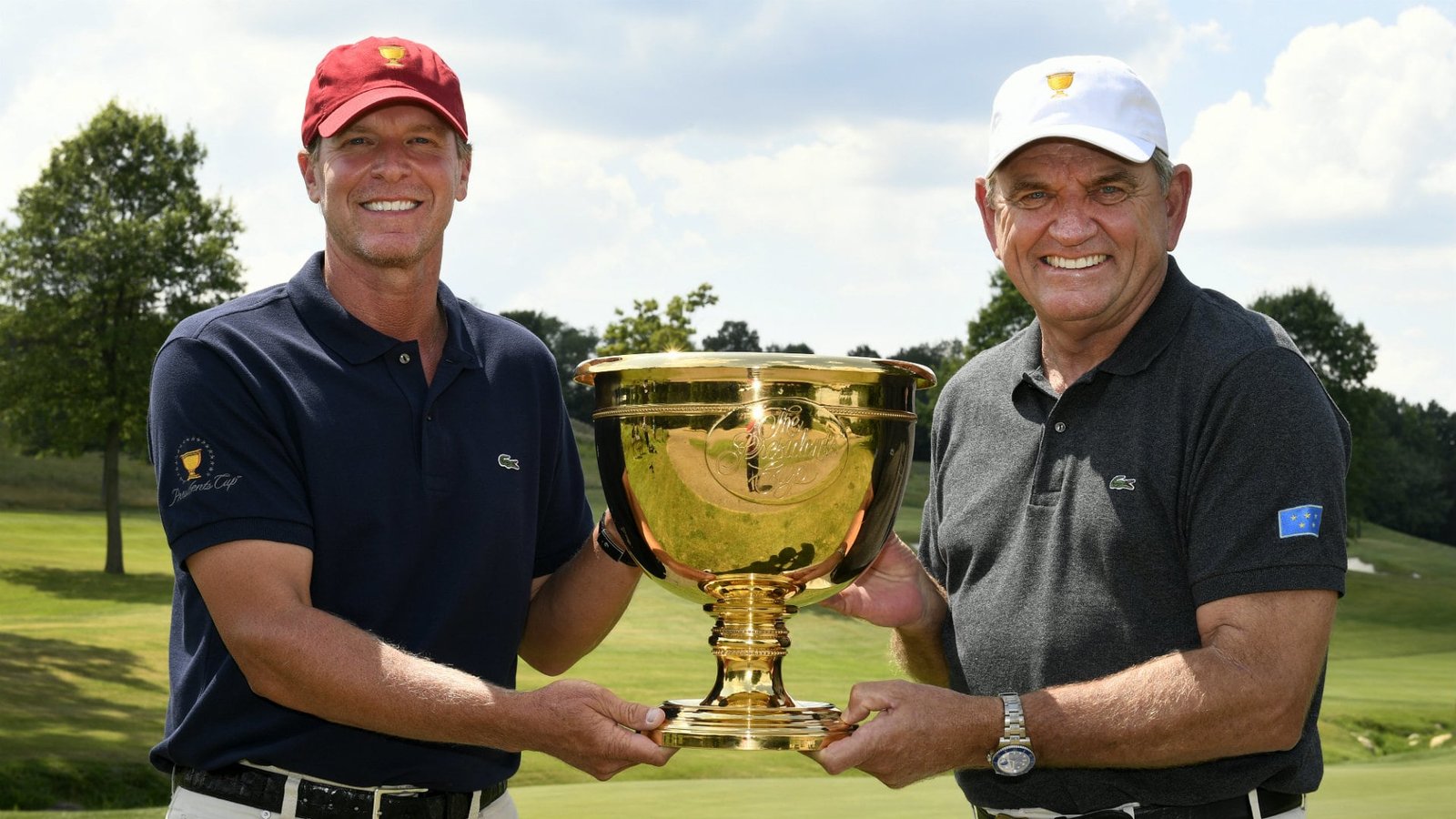
Steve Stricker and Nick Price pose with the Presidents Cup

The matches will begin on what is normally the 5th hole, which makes sense to me because most matches will end around the 18th hole (14th with the new routing). Match play is about getting the most exciting play, not about playing every hole. Not really a story, is it?

Team USA has already decided they won't be doing any protests like the NFL has been doing. Again, that makes sense to me. I realize the choice is probably driven as much by public opinion and perceived economic impact as anything, but the current protests are having a mixed effect. The fact is that most people don't want to deal with the real issues that caused the protests in the first place, so the public debate has become one about "respect" rather than the racial profiling and brutal treatment that prompted the whole thing. The existing protests are at least keeping people talking; it will take something else to focus the debate on the real issues -- things which are unlikely to happen at the Presidents Cup. So this isn't really a story either.

But ten of the 24 players are rookies, and only two of them are Captain's Choices. That's something that could potentially be a story. The Ryder Cup considers large numbers of rookies undesirable, so this event is where we get our best chance to see future team players. (A note: The Euros have other team events that they use to "break in" their new guys.)

With six rookies on the US team and four on the internationals, I actually believe this helps the Internationals. The US players may be rookies, but they're more used to playing together. (The Mickelson team practice rounds are legendary!) The Internationals will have two "vets" for each rookie, which should give them more potential pairings for getting production right out of the gate. Don't be surprised if the Internationals get off to a fast start this time.

Finally, I think the language issue is going to be much less important to the Internationals. I believe all of their players except Matsuyama and Kim speak English, and Matsuyama has been here before so that should be less of an issue for him this time. (And if I'm not mistaken, Matsuyama can understand some English, even if he's uncomfortable speaking it.) In addition, this is Price's third time as Captain. If I'm right, that all means the team dynamic should be much better for them this time around.

So who's going to win? As an American, of course I'm rooting for the US team. But I think this Cup is far less predictable that the others have been. I think the teams are much more evenly matched than the stats predict, and I won't be surprised if the Internationals pull an upset. I guess we'll know soon enough.

Saturday, September 23, 2017

How to Ride a Banshee (Videos)

Friday was the last day of my vacation at Disneyworld, so by the time most of you read this I'll be back in good old North Carolina. But rather than write about golf -- which I'll have plenty of time to do over the next few days -- I thought I'd tell you about something unbelievably fun that I did at Disney.

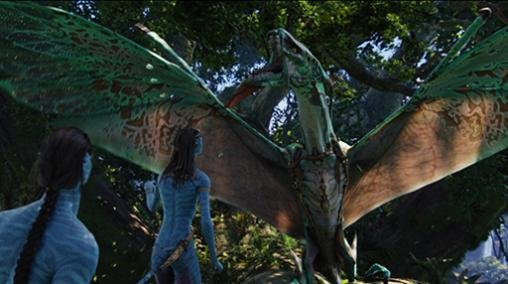
On Friday I rode the Avatar: Flight of Passage ride in Animal Kingdom -- that's right, the one where you get to ride an ikran, better known to us humans as a banshee. For those of you who never saw the movie Avatar, here's what a banshee looks like:

Mountain Banshee with Na'vi warriors

Pretty cool, eh? I think the ride has become way more popular than Disney anticipated because... well, let's face it. Most rides, if there's a 90 minute wait time, people don't get in line. They try to get FastPasses -- a pre-arranged time to return and ride without much of a wait -- and barring that, they simply wait to ride some other time.

However, the word of mouth about the banshee ride is different. FastPasses were unavailable all week (for several weeks, based on what I've heard) yet every person I talked to this week said I should ignore the time in line and JUST GO. And so I spent three hours Friday getting a ride -- it was a two hour wait when I started at 11:15, then some of the simulators went down from apparent overwork, and I finally finished the ride at 2:15.

And they were right. It was TOTALLY worth it. So I found some YouTube video that gives you an idea how Disney managed to make this thing believable.

If you've ever ridden Soarin', Disney's hang glider sim, AFoP is Soarin' overdosed on steroids. You can actually feel the banshee breathing as you sit on it! Add in the sensations, the sounds, the smells, even the feel of the wind and ocean spray, and you end up with an amazingly real experience. They even found a way to simulate the feel of your avatar's actual movements as you sit on the simulator, which is quite simple but blindingly effective. It's just cool.

And I've found some YouTube videos to help you understand what I did Friday. First, here's a video from Attractions Magazine that was shot when the ride opened back in May. It shows you the simulator "saddle" and some of the stuff that you go through before you ride. But this doesn't show you everything. This is just the basic orientation stuff. There some fun stuff where, for instance, your DNA gets scanned for an avatar match, that isn't shown here.


But somebody taped their entire 4:30 ride and posted it to YouTube. I've included it below. Bear in mind that this doesn't even begin to let you know how the ride feels -- for example, the whale that leaps out of the water in this video is HUGE when you're on the ride and it nearly lands on you as it comes down. You can hear the person who taped this screaming as she rode... and it's not just for effect; I found myself doing the same sort of thing.

And I just don't do that, people. But this one had me reacting as if I was really plunging straight down toward the ground on the back of a flying lizard. Have a look:


This isn't a sales pitch by any stretch. But this is one of the best vacations I've ever had, and I have to attribute much of it to this ride.

So remember, folks: There's way more to life than just golf... and riding a banshee definitely fits in that category! The next few weeks are gonna feel a bit boring by comparison.

Friday, September 22, 2017

A Variety of News Articles

Although I've been keeping up the posts this week, I am in fact on vacation in Disneyworld with friends. I haven't had time to do swing analyses and such, so I haven't tried. And while the trip is almost over, it's still going to be a couple of days before I'm back in North Carolina. So today I'm just linking you to some interesting news bits that I've run across -- in-between flights to Mars, fireworks displays and trips to a comedy club run by monsters, that is.


I found articles at both Golfweek and Golf Digest about Catriona Matthew's appointment as 2019 Solheim Cup captain. I don't think this is any real surprise, as that competition will be held in Perthshire, Scotland. Still, it's nice to know that the Euro team didn't drag out what really should be a no-brainer.

Golf.com has a neat article about a new Kickstarter crowdfunding campaign for Beer Pong Golf. To quote the article:
The venture was launched on the crowdfunding website Kickstarter earlier this summer, and in a few days it had sailed past its goal to raise $20,000. As of Thursday morning, 874 backers have poured $138,274 into the project
The irony here is that something simple like this may be a bigger draw to new golfers than some of the more publicized (and expensive) attempts to create a simple entry point. This is a grassroots, play-it-in-the-backyard approach that could become addictive.

I also found two articles about the new Titleist AVX ball. Golf Digest focuses on the initially limited distribution while Golfweek focuses on the construction. But neither article is very long because the ball is so new.

And finally, Golf Digest has an article about how Michael Phelps is helping Tiger Woods -- and other athletes -- deal with the various drug-related depression problems and such that are becoming more common among star athletes.

Those are the interesting bits I've seen between vacation highlights. Hopefully you'll enjoy them. (Especially the Beer Pong Golf. That really sounds like fun!)

Tuesday, September 19, 2017

Why Randall Mell Might Be Wrong

It's become very popular over the last week to criticize how the Evian Championship played out, with the first round being wiped out, the event shortened to only 54 holes and the apparent mandate to finish the major in Sunday's broadcast slot. Randall Mell even wrote an opinion post called Randall's Rant: The Evian earned a major* asterisk to focus on what he sees as the problem.

He points to Mike Whan's belief that "We have to start thinking like title sponsors," that the LPGA needs to focus more on its sponsors than on the inherent integrity of the game.

photo for Mell's editorial

Now don't misunderstand. Mell isn't criticizing Whan's importance to the LPGA or the women's game in general. What he questions is whether Whan's approach works for majors as well as it works for women's golf in general.

And make no mistake, it has worked spectacularly.

As I see it, his question ignores a very important fact: The reason that the other four women's majors have become so respected is because Whan has adopted this approach. Let me explain, and I'll try to keep this short because I think the issue has been blown out of proportion but does deserve to be addressed.

Mell points out that, among Whan's other great achievements as LPGA commish, one of the things he has done successfully is convince (if you'll pardon the pun) major players in the men's game that the women deserve to be taken just as seriously. And the very reason Whan has achieved this "rise in status" for the women's game has been his attention to the sponsors. Let's look at some things that have happened since Whan became commish in late 2009.
  • More Open venues have become hosts of the RICOH Women's British Open, beginning with Carnoustie (2011) and Royal Liverpool (2012).
  • The PGA of America and the LPGA have begun working together, and that has resulted in the LPGA Championship becoming the KPMG Women's PGA Championship and expanding its play to the same championship venues that the men routinely play.
  • The PGA Tour and the LPGA Tour have begun working together, and this has also resulted in better quality events overall.
All of these advancements took time, but they happened in a much shorter timeframe than most expected. This is because Mike Whan has consistently taken gambles that appeared foolish, even contrary to the health of the women's game. Time after time, Whan's instincts have proven to be not only correct but successful to an inexplicable degree.

So when Mell ends his article with a medley of faults inherent in the Evian -- faults which he believes have become damaging to the LPGA -- and with the following statement:
Riboud’s working on it [the shortcomings], and Whan’s working on it, but we saw decisions last week that clash with major championship tradition.
I find myself laughing. As Mell himself notes, Whan declared the Evian a major just five years ago. I ask, what was the situation like at that time and how has it changed?

Evian was, at that time, considered a major by the LET although it wasn't accorded such status by the LPGA, and the sponsors had been the sponsors for a long time with little change made. Yet, in five short years, the Evian Championship course has undergone major renovations -- which are still continuing, as Mell notes in that previous quote -- the purse has gone up dramatically and the women themselves are taking it more seriously.

Is it perfect after five years? Of course not, and the tweets from the women themselves this past week indicate that they aren't satisfied yet. But this event has come much, much, MUCH further along than it would have without the "Whan approach." And we know that Mike Whan himself, as well as the sponsors -- who were satisfied with the event for so long -- we know that none of them are satisfied either.

In a word, we wouldn't even be having a discussion about how far this event has to go if it weren't for Mike Whan risking this sort of criticism. If not for Whan's somewhat radical approach, the LPGA would likely be in worse shape than the LET is right now... and the LET is willing to listen to Whan's ideas because Whan's involvement causes the Men's ET to get involved.

Randall Mell is wrong. The Evian doesn't get an asterisk for failing. Before long it will likely be seen as a major stepping stone in the growth of women's golf, because we know Mike Whan & his co-conspirators will use this as a goad to drive their game to higher levels of excellence.If this Evian gets an asterisk, it will be for inspiring new advancements in women's golf. And why am I so sure?

Because that's what Mike Whan has done time after time since he became LPGA commish. Given his success rate for meeting challenges so far, I see no reason to believe he won't meet this one as well.