ATTENTION, READERS in the 28 EUROPEAN VAT COUNTRIES: Because of the new VAT law, you probably can't order books direct from my site now. But that's okay -- just go to my Smashwords author page.
You can order PDFs (as well as all the other ebook formats) from there.
Showing posts with label basic principles of the game. Show all posts

Saturday, August 11, 2018

Bobby Jones on the Feel of a Golf Swing

This quote comes from the book Bobby Jones on Golf. It sort of goes against the grain of most modern thought, but I think a lot of golfers would find the game much simpler if they believed this legendary golfer.

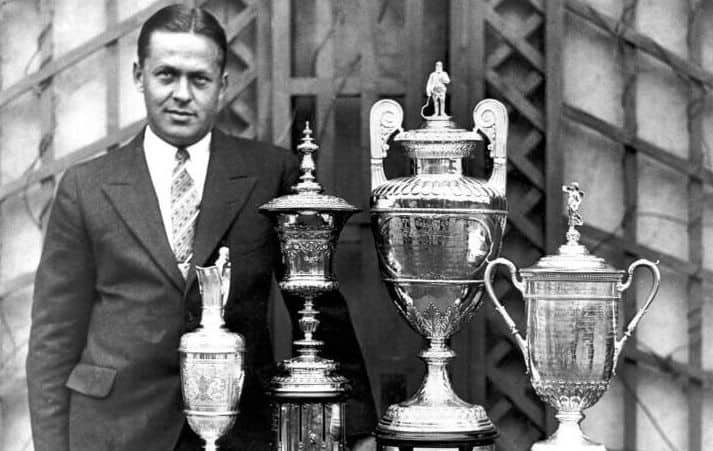
Bobby Jones with the Grand Slam trophies

Here's the complete quote:
There is nothing occult about hitting a golf ball. In fact, although the application may be a bit more complicated, we use no more than the ordinary principles of motion we encounter numberless times every day. Once started upon a correct path, the club will tend to hold to its course until outside forces cause a change.

The great fault in the average golfer's conception of his stroke is that he considers the shaft of the club a means of transmitting actual physical force to the ball, whereas it is in reality merely the means of imparting velocity to the club head. We would all do better could we only realize that the length of a drive depends not upon the brute force applied but upon the speed of the club head. It is a matter of velocity rather than of physical effort of the kind that bends crowbars and lifts heavy weights.

I like to think of a golf club as a weight attached to my hands by an imponderable medium, to which a string is a close approximation, and I like to feel that I am throwing it at the ball with much the same motion I should use in cracking a whip. By the simile, I mean to convey the idea of a supple and lightning-quick action of the wrists in striking - a sort of flailing action.
That doesn't mean that strength isn't useful, only that it's used to create speed rather than create power. It's a different way of thinking about golf.

And most players would probably be longer and more accurate if they tried to swing as Jones suggests, rather than pretending to be cavemen (or cavewomen) beating a mastodon to death. I'm just saying...

Tuesday, July 24, 2018

Denis Pugh on More Consistent Ballstriking (Video)

Francesco Molinari just won the Open, so of course I have a video from his coach Denis Pugh. In this video Pugh is trying to help a player hit the ball more consistently.


Pugh wants -- as I do -- for you to learn how to turn without sliding. When you slide too much toward the target, you do all kinds of crazy things like change your spine angle, change your body position relative to your ball position, and throw your balance off. If you want more consistency, you need to stop that!

As you can see from the video, what Pugh tries to get this student to do is open his legs as he turns through the ball. (That's why he sticks the club shaft between his legs and holds it against the inside of his trailing thigh.) However, you can't hit balls with someone holding a club between your legs, but you can learn this move by using a drill.

Fortunately I have one for you. It's been on my blog for over seven years, and here's a link to it. It's called the Basketball Drill, and it's very simple. You hold a basketball between your knees, and you try to drop the ball during your downswing by moving your lead knee forward -- that gives you the hip opening move that you try to create when you slide -- while your trailing knee doesn't move so much. It minimizes lateral movement toward the target while still letting you unwind your hips as quickly as you can.

I think you'll find this drill actually lets you create more hip speed than the slide does because you don't waste energy pushing your body forward. But -- and this is important -- it DOES allow you to create a weight shift, which moves you toward the target a little but not enough to change your body's position relative to the ball. As a result, you get more consistent contact.

A simple but very effective drill. It may not turn you into Francesco Molinari (that's a matter of practice) but it will teach you the basics of a solid move into the ball.

Sunday, December 24, 2017

Jim Flick on Building a Solid Swing

The late Jim Flick was highly respected as a teacher -- so much so, that Jack Nicklaus worked with him after Jack Grout died and built the Nicklaus/Flick Golf Schools with him. Here are some of his thoughts from his book On Golf.

Jim Flick

This comes from a section called The Long and the Short of It. Note that Flick often used the term instrument rather than club.
What is the difference between a swing that produces a delicate 60-yard pitch shot and one that delivers a booming 275-yard drive?

Not much.

One key message I want to deliver -- and, believe me, I will deliver it over and over again until you accept it as the truth -- is that the basic concepts underlying the short game and the full swing are essentially the same.

Your swing doesn't change very much when you go from a sixty-yard part shot to a full swing from the tee -- it mainly just gets longer to accommodate the instrument being used and the distance the ball has to travel.

Are there any differences? Sure. Do they involve radical departures in aim, posture, routine, or relationship between the swinging and turning elements? No.

That's one of the reasons I like to start players with the short game: because it helps them develop the imagery to play golf, along with feel and sensitivity for the use of the club and the swinging elements.

For instance, when you're making a part shot -- say, a sixty-yard pitch -- it's easier to sense the swinging force of the club head and the position of the club face than it is in a full swing with a long iron or a wood.

To develop your sense of feel in golf, put down your driver and pick up a short or middle iron. [p41]
Take note of that. The man who had the trust of Jack Nicklaus, both as his personal instructor and his business partner, advised his students to use a short or mid-iron if they really wanted to hit their driver better. He believed that was the key to developing the kind of feel that will make you a better player.

Flick believed we have become too mechanical in our teaching methods, that we need to get back to teaching feel. I'll leave you with another short quote from his book -- in fact, it's one of my most favorite Flick quotes:
If as much were written about sex as there is about golf, life would be extinct by now.
Sometimes, feel is far superior to technique. Just a thought.

Tuesday, December 19, 2017

Bobby Jones on How Your Form Affects Your Swing

Since this is Christmas week and most of us are too busy for long posts, I plan to post a quote each day from a famous player or teacher. When you have a moment, this bite-size chunk of instruction will give you something to think about.

Today it's from Bobby Jones.


From Bobby Jones on Golf, from an article called How Form Affects Swinging:
The man with a faulty swing ties himself up so that a smooth stroke becomes impossible. The expert swings smoothly because his successive positions are easy and comfortable, and are such that the movement from one to the other is not hampered by unwilling muscles. The average golfer does not swing smoothly because at some stage he creates a condition that makes it easier for him to move in the wrong direction than in the right one. [p14]
This is a different approach than most players take. We tend to think that it's hard to make a good swing because our natural movements are wrong. Jones says that "unwilling muscles" are the problem... and if a muscle is unwilling to move a certain way, that sounds more like an UNnatural movement, doesn't it?

In other words, Jones says we have trouble swinging because we try to move in a way that ISN'T natural for us.

If we're having a lot of trouble swinging well, perhaps we should reconsider the swing we're trying to make. Perhaps it isn't the swing best suited to our body!

Friday, November 17, 2017

Claude Brousseau on Giving Up Control (Video)

GC posted this drill from instructor Claude Brousseau that teaches you to gain control of your swing by giving up control. Sound crazy? It's not. It's about learning how to trust your natural movements.


What this drill teaches you is what instructors used to call "feeling the clubhead." By using this drill, you'll learn how to feel pressure changes in the shaft at the change of direction, which is caused by the clubhead's reaction to gravity as it changes direction from backswing to downswing.

Really, it's much easier to feel than it is to explain.

By taking your trailing hand off the club's handle and placing it on top of your lead hand, those pressure changes will be focused on your lead wrist. Brousseau wants you to swing slowly because, if you aren't used to it, your first experiments with this drill might HURT if you swing fast. You don't want to injure your wrist, so take it easy to start!

Once you get used to this, however, you'll be able to speed up your swing. Why? Because this drill teaches you how to feel the rhythm of your swing. Once you start to feel it, you'll learn how to move with it and create more speed with less effort.

Btw, you may be surprised to find that this drill helps you square up the clubface better than you usually do. That's because the natural movement of your lead arm will square up the clubface if you don't impede it. That's where the often-heard advice to "control the club with your lead side" comes from. But actually, you just need to let both hands and arms work together... which is exactly what this drill teaches you.

Try it without a golf ball at first. When you feel more comfortable with the drill, try hitting some golf balls. I think you'll have fun working with this drill, and your ball striking will improve.

Thursday, November 16, 2017

The Exciting World of Exaggerated Teachings

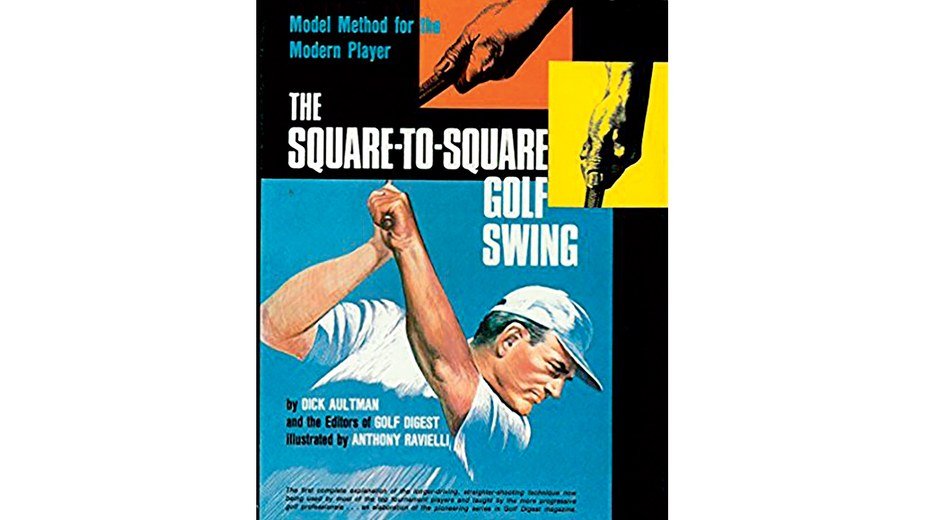
The Square-to-Square Golf Swing coverGolf Digest has published an intriguing article at their website called Is This the Worst Golf Instruction Book of All Time? with the subtitle We should know—we published it. That book was called The Square-to-Square Golf Swing and it was written by Dick Aultman. It was based on concepts espoused by Jim Flick -- yes, THAT Jim Flick -- and Flick became a major proponent of the method. The article follows the history of the rise and fall of the method.

Eventually Flick disassociated himself from it because it embarrassed him so badly. Even good teachers make mistakes!

I think this article can really help you understand why golf instruction is often so complex... and why such problems aren't limited to just one method.

In fact, the problems are typically just exaggerations of standard golf teachings. The swings have been designed to eliminate specific problems that golfers face, but they create other problems that have the unintended effect of complicating the swing. Most often the method requires an unusual amount of strength to do it consistently.

About halfway through the article, Golf Digest has performed a great service by listing a number of method books that, while they are great for certain players, tend to overcomplicate the swing for most golfers. I'm going to summarize the main ones they list, but you'll want to read the article to get the whole story.
  • Hogan's Five Lessons: To quote the article, "...it has been a disaster for anyone who lacks Hogan's need for an anti-hook swing..." I've mentioned this often in this blog because it's my biggest criticism of Hogan -- if you don't already have a duck hook, you have to develop one or you'll slice the ball off the face of the earth. There's a lot of good in Hogan's book and I've done many posts focusing on those points, but I've also tried to point the exaggerations out.
  • How to Perfect Your Golf Swing: I've often mentioned Jimmy Ballard because of his focus on connection, but Ballard did overemphasize the move off the ball onto your trail foot in the backswing. Some of my instructor Carl Rabito's recent teaching has used this move as well, but the drills he used to teach me "back in the day" didn't use that move at all. It's easy to get stuck on your trail leg if you get too caught up in this move.
  • The Stack and Tilt Swing: Another book with a lot of good teaching in it, but it can create the opposite error from Ballard. Bennett and Plummer want you to keep your weight more on your lead foot during your swing, which can create a reverse pivot. Sean Foley uses a lot of these principles in his teaching. Again, this doesn't mean he's a bad teacher, but the method can cause problems for a lot of players.
  • Natural Golf: Get a Grip on Your Game: This is one of the books focusing on Moe Norman's techniques. I happen to have this one, so I can tell you that it focuses a bit too much on creating a hammer blow to hit the ball. It can substantially change your fundamentals so, while it's fun to experiment with, it can cause problems with your normal swing if you aren't careful.
  • The Golfing Machine: I believe this is the method Bobby Clampett used, and Bryson DeChambeau is a big believer in it. Golf Digest points out that this method isn't a self-teaching approach, so bear that in mind.
Again, let me repeat: In no way is this a condemnation of these various approaches to the golf swing. It's just a reminder that, as a general rule, NO METHOD IS FOR EVERYBODY. But this article can help you identify where you might have problems if a particular method isn't working for you.

And knowing what causes the problems is the first step to fixing them.

Take some time and read the article. I think you'll be glad you did.

Friday, July 7, 2017

The Question of Self-Taught Swings

There's a fascinating article over at the Golf Digest site simply called Do It Yourself: Swings. And it has this provocative subtitle: Even instructors agree, the best players are often self-taught.

This strikes me as an amazing statement, given the constant stress being placed on drills and stats and biomechanical measurements. But perhaps this article represents a realization by some of the teaching fraternity that we're getting too caught up in the quest for perfection.
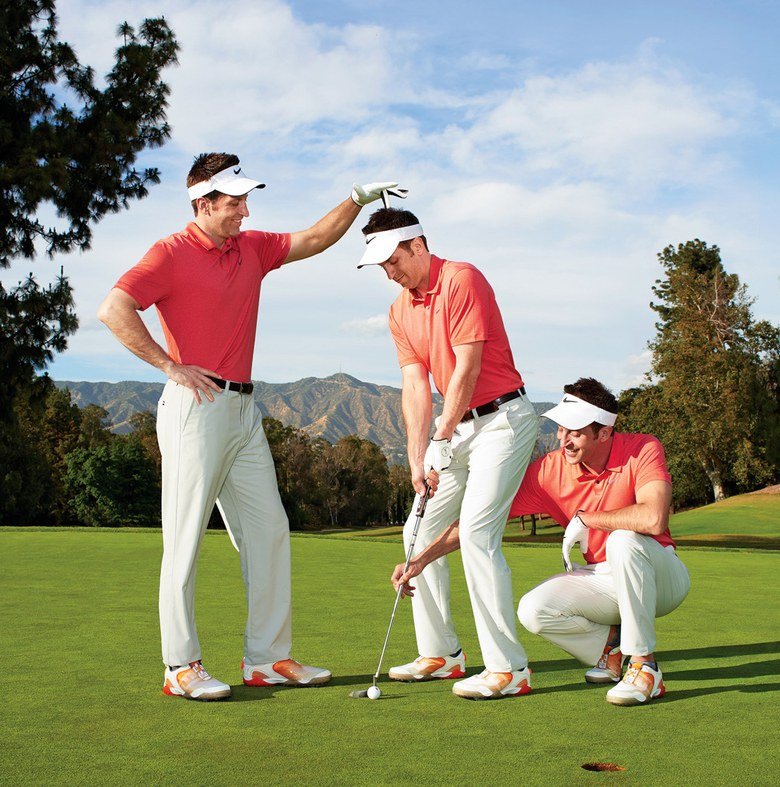
Photo from DIY: Swings article

And yes, the emphasis of this article seems to be on finding the way you swing most naturally. Logically, the more natural your swing feels, the more consistent it should be over time. Is that what really happens? It still depends on whether your swing is basically sound or not. After all, if you continue to work against the laws of the natural world, your swing is never going to be all that great!

The article, which is a reasonably complete beginner's guide to finding your own way, has advice from folks like Bubba Watson and Jim Herman, like this quote:
Keep it about outcome, even in the beginning. "Everyone should be thinking about where they want the ball to go while they're standing over a shot, not how or what technique to use to get it there," Herman says.
And Bubba says to focus on the three feet of your swing from just before impact to just after, just as a couple of examples.

That doesn't mean you can't use drills, folks. It just means you should find drills that actually help you. If you're just doing drills to say you're doing drills, that's not going to do your swing any good.

There are also some tips from instructors, as well as some warnings. You can screw your swing up pretty badly if you aren't careful, so they remind you that you can always seek help from instructors if you get stuck. But if you wait too long to get help, it can take quite a while to fix your errors.

I point out this article because it's a pretty useful one. It gives you some solid guidance on how to start maintaining your own swing if you are so inclined, as well as pointing out the potential pitfalls.you might run into. If you want to go this route, those are all things you need to know.

I maintain my own swing; I know where I'm most likely to go wrong; I know what I need to work on. But I also began with some solid instruction that I knew worked for me, and I've held firmly to those fundamentals throughout my experimentation to improve my swing. Because of that, even though I've had periods when I struggled while making a change -- change is rarely easy and it takes time, after all -- it's been years since I felt lost. All of my experimentation is based on knowledge of how I swing best, so my fundamentals stay intact.

If you decide to go your own way, just be sure you know where you're starting from. Because I can tell you this from experience: The reason I was able to try things was that I knew what I couldn't change if I wanted to keep making contact with the ball!

Or, to put it another way... you can't get there from here unless you know where "here" is. Take the time to learn that first, and you should be okay. But if you need a coach to keep your swing on track, that's okay too. If that's where your "here" is, there's no shame in acting on it.

Thursday, May 18, 2017

A Quick Look at Byron Nelson's Swing (Video)

Since the AT&T Byron Nelson starts today, I thought I'd give you a quick lesson on how he hit the ball so straight. This is his swing in 1945, when he set all those records.


This video starts with a regular-speed swing, then runs it in extremely slow motion. There are other videos that use this footage, but this one made it easier to see both of the things I want to point out.

First thing: Everybody talks about Hogan's waggle, but there are other ways to start your swing. This video clearly shows how Nelson bent his trailing knee toward the ball to start his backswing. He's not the only player to have done this -- Gary Player comes to mind -- but he may have been the first.

Second thing: And this is the key to his accuracy. You know how every teacher tells you to start your hips before you start your shoulders, so you can increase the angle between your shoulders and hips on the way down to increase power? Nelson doesn't do it! Instead, you can clearly see that the angle between his shoulders and hips doesn't change. In fact, his upper body moves forward, toward his target.

Personally, I'd rather you didn't move your upper body so far forward as you start your downswing. That causes you to lose some clubhead speed. But Nelson starts with so much weight on his lead leg that it can't really be helped -- he has to move away from the target during his backswing or he'll reverse pivot during his downswing. You'll want to keep your weight more centered when you address the ball so you don't have to move your upper body so much.

However, keeping that shoulder-hip angle fairly constant as you start your downswing is a key to increasing your accuracy. When you increase that angle, you do increase power -- but you also alter your spine angle, and that changes your downswing plane, sometimes dramatically. (This dramatic change is a cornerstone of Hogan's downswing, btw. Virtually every good ballstriker's downswing plane is a bit flatter than the backswing plane, but a big change costs you accuracy.)

While you may lose a bit of clubhead speed with this move, you'll also hit the ball more solidly. Given the design of modern equipment, that will add some distance on its own.

And just for the record, the Nelson approach is easier on your lower back as well. More accuracy means more consistent ball contact, and less back pain means... well, less back pain. It's a win-win situation.

Saturday, April 29, 2017

Rocco Mediate and Jim Ferree on Swinging Lower (Video)

I know this clip from Champions Tour Learning Center is funny, but I'm posting it here because the drill is so simple and yet so helpful. Take a look:


When Rocco says that you need to swing lower if you're topping the ball, he's talking about a whole lot of things -- footwork, weight shift, balance and so on. Most players think they're lifting their heads and don't realize that you can only lift your head if you straighten your legs too early! And so Rocco and former player/teacher Jim Ferree recommend this simple drill.

Start with a chipping motion. Just hit short chip shots, then gradually lengthen the chip shots until they are full swings. If you do this, you'll learn to hold your posture, your spine angle and your knee flex throughout your swing. Your lead knee should remain slightly flexed until you hit the ball. Your lead knee straightens at that point because body rotation forces it to. Just let it happen!

As Rocco says, this game is a lot simpler than we make it. This drill can help you clear your mind of the over-complications and learn to swing more naturally.

Wednesday, December 21, 2016

Jim Flick on the TWO Pendulums in Your Swing (Videos)

The late Jim Flick was well respected in the golf community. He was one of those teachers who seemed able to help almost anybody because he used such simple images to teach the basics.

In his book Jim Flick on Golf he gave a very simple explanation of how to use your hands and arms in a golf swing to create speed. I bet you've heard this explanation before but I'd also bet you didn't really understand it. Let's see if we can change that today. Here's how Jim put it in his book:
There are actually two pendulums at work. The first is formed by the hands and wrists cocking, uncocking, and recocking. The second is created by the forearms and upper arms swinging from the shoulder sockets.

My former colleague from Golf Digest school days Peter Kostis called them the first swing and the second swing. I think of them as two pendulums.

What permits the two pendulums to work together is the combination of the weight in club head, centrifugal force, the good old law of gravity -- and the golfer. These pendulums supply about 80 percent of the distance in your golf shot -- provided the swinging elements of your body drive the turning elements and not vice versa.

If your grip pressure is too tight, the weight at the end of the club is restricted from doing its job.

If you try consciously to turn your shoulders and shift your weight, you destroy the natural harmony of those two pendulums.

If you try to accelerate at impact and follow through, well, you know what happens there. [NOTE: This is a reference to an earlier section in the book. If you TRY to accelerate, you interfere with the natural motion and actually lose clubhead speed.]

But if your posture is good, and your grip pressure -- fingers secure, arms relaxed -- is correct, you give those two pendulums a chance to work in harmony. (p58-59)
Alright, the two pendulums are the one stretching from the clubhead to your hands, and the one from your wrists to your shoulder joints. Your wrist joins the two of them together, and act as the pivot point. When your wrists are fully cocked, the clubhead-to-hands-to-shoulder-joints stretch looks like an L shape.

No doubt you've heard of an 'L-to-L' swing. It's a common way to learn pitching technique. You swing your hands back to waist high (an L with the club shaft pointing straight up), then they straighten out as the clubhead hits the ball, and finally they form another L in the followthrough (again, with the shaft pointing straight up). Here's Mike Malaska, who worked closely with Jim, demonstrating how this works.


Please note that Mike isn't trying to drive his lower body when he does this. The club's motion pulls his upper body around, and then his upper body pulls his lower body around. As you gradually get out to a full swing you'll start to use your legs more, but it'll be a very natural leg drive -- you won't be thrashing at the ball. (Mike refers to this added drive late in the video when he mentions "using the ground.")

Let me anticipate a question here: When you do this drill at waist high, your wrists will cock as your hands slow down at waist high. When you make this move in a full swing, your wrists will cock as your hands slow down near the end of your swing. It's the change of direction that creates the wrist cock. Got it?

Okay, here's a bonus video with Malaska teaching you how to use the L-to-L drill to learn shot shaping. I bet A LOT of you will be working with this one!


Using the L-to-L drill will help your swing in so many ways, including improved balance, better footwork and weight shift, and eventually longer distance for less effort. This is a post you'll want to bookmark in your browser and come back to again and again.

Wednesday, November 30, 2016

Learning Golf with a Grass Whip (Video)

I've run across several videos that teach a basic golf swing using a grass whip and, while many of you will probably laugh at this, I used a grass whip when I was younger (my dad used to have one) and the principle is sound. This particular video from instructor Shawn Clement is one of the better quality ones that I found.

Take a look. It's pretty self-explanatory.


Basically, a grass whip teaches you how your arms and hands work during a golf swing. If you watch, you'll see that Shawn's lower body is working exactly as you would expect, but you don't think about your lower body. What you think about is the hand action that swings the whip, and the leg action happens automatically.

The motion is very similar to the video of a sand shot made by using the Carlton Dance that I posted a couple weeks back, except that the action is more vigorous. Both are great ways to learn what a basic but sound golf swing feels like.

Sunday, March 20, 2016

Brandel Chamblee and the Holy Grail

Anatomy of Greatness coverI couldn't resist that title -- especially since I can blame Golf Magazine for it!

Brandel Chamblee has a new book out called The Anatomy of Greatness, which looks at the things all the great players of the game have had in common. And Golf Magazine has done an article, with a video interview that's pretty interesting, at this link, and it focuses on the one thing that Chamblee believes most weekend players need to know to improve their golf games.
BTW, in the video Chamblee refers to a now out-of-print book called The Methods of Golf's Masters. If you happen to be interested in finding a copy, I've read the book before and you should know that there are two different editions. The original stops with players of the 1960s; Brandel mentions the second edition, which includes Seve and Greg Norman, among others. Make sure you get the one you really want!
I haven't read Chamblee's book but I like a lot of what he says in the interview. His 'Holy Grail' is lifting your lead foot and letting your lead knee move behind the ball during your backswing, which goes against the 'restrict your lower body' advice that is generally given to players today.

Chamblee blames this on Ravielli's drawings in Hogan's book Five Lessons, and he says Ravielli misinterpreted Hogan's words -- that Hogan actually did lift his lead heel. In reality, it's a bit more complex than that. Here is what Hogan says in the text of the book, from pages 74 and 75 in my paperback edition:
THE LEGS. When the hips enter the swing, as they are turned they pull the left leg in. The left knee breaks in to the right, the left foot rolls in to the right on the inside part of the sole, and what weight there is on the left leg rides on the inside ball of the foot. LET ME CAUTION YOU AGAINST LIFTING THE LEFT HEEL TOO HIGH OFF THE GROUND ON THE BACKSWING. IF THE HEEL STAYS ON THE GROUND -- FINE. IF IT COMES UP AN INCH OFF THE GROUND -- FINE. No higher that that, though -- it will only lead to faulty balance and other undesirable complications.

The body and the legs move the feet. LET THEM MOVE THE FEET. As regards the left heel, how much the left knee breaks in on the backswing determines how much the heel comes up. I never worry about the left heel. Whether it comes off the ground a half inch or a quarter of an inch or remains on the ground as a result of my body and leg action on the backswing -- this is of no importance at all. I pay no attention to it.
"This [lifting the lead heel] is of no importance at all." Hogan can't disagree with Chamblee much more than that! To keep his foot that close to the ground, he has to restrict his hips during the backswing. Hogan HAS been treated like a god -- that's Chamblee's description, but I've used it myself at times (I maintain that no one player is right about everything, not even Hogan) -- and Ravielli's drawings accurately depict Hogan's lead heel barely leaving the ground.

I found Chamblee's remarks about the Long Drive champs particularly interesting -- namely, that if restricting your lower body led to longer drives, they'd all do it. But they don't! (I should note that some of the longer hitters on Tour do keep their lead heels on the ground, but none of them routinely hit the ball over 400 yards. Yet many of them also struggle with back problems, which the Long Drive champs rarely do.)

It looks like I may have to pick up a copy of his book just to see what else is in it. I don't always agree with Brandel, but this book -- controversial as it will likely be -- may be just the thing the golf community needs.

The book cover photo came from classicsofgolf.com.

Saturday, March 19, 2016

Cheyenne Woods on Mastering Your Swing

I believe this is the first time I've had a tip from Cheyenne, and this is an extremely good one. You can read the entire article at this Golf Digest link, but I'll add a few extra thoughts.

Cheyenne Woods

Basically, Cheyenne's tip boils down to this: You can dramatically improve your game by focusing on just one club. In her case, it's the wedge. No, she doesn't say which one... and that's what I want to focus on.

Many of the great players in our game have learned to play with just one club. Seve learned with a 3-iron, and stories of him hitting greenside bunker shots with one have become legend. Judy Rankin recommended beginning your golf education with an 8-iron in an instruction book she wrote. And I remember reading a magazine article where Chi-Chi Rodriguez talked about the things you could learn by playing a full round of golf using only a 4-iron.

What makes a single club such a valuable learning tool?
  • Using one club makes it easier to learn consistent contact because you don't have to keep adjusting for different shaft lengths. (You can learn that after you can hit one club reasonably well.) Cheyenne mentions this in her article.
  • To hit shots of different lengths, you have to learn how to match up swing length with shot length. You won't be hitting every shot with a full swing!
  • Tagging on to the last one, Cheyenne mentions that hitting many less-than-full shots will help your weight shift. If you aren't trying to kill the ball, which makes you tight, it will translate to a more fluid motion.
  • Like Seve, you'll learn to manipulate the loft of the club to create different trajectories for different shots. Chi-Chi specifically mentioned learning to control distance by learning to draw and fade a single club.
  • In general, it will just force you to think creatively when you play. You'll have to think about shots when you can't just pull another club from the bag.
Just spending some time on the range, hitting a single club to a variety of different flags, using different shot shapes and trajectories, and then doing some chipping and putting with the same club, can help you become more confident of your ability to work your way around the golf course.

It's a simple tip that can be fun as well. Try a 9-hole match with only one club, letting each player choose the club they want to use. That can really liven up a game... and make for some interesting betting!

Tuesday, March 15, 2016

Some Thoughts on the Search for the Perfect Swing

Jean Luc left a comment on Sunday's post (about the baseball drill) where he mentioned a problem that many of you have -- namely, that you have spent a lot of time trying different swing methods and now find yourself confused. I wrote him an extended reply, most of which I'm going to repeat in this post (with some extra thoughts) because I know many of you are in the same boat.

Perhaps it will help some of you find peace with your swing.

I learned the basics of the game over 25 years ago from Master Teaching Pro Carl Rabito. (There's a link to his site in the sidebar, if you're interested.) And around a decade later I also spent time trying a lot of different swings, just to test what he had taught me and make sure it was the best way for me. It didn't harm me at all -- in fact, I now have a better grasp of what will and won't work for me, so I don't waste time now practicing tips that won't help me.

Your time trying different swings should have taught you that, for the most part, every swing has a handful of things in common. My absolute basic list of fundamentals has 3:

  • a one-piece takeaway, because an inside takeaway generally leads to an over-the-top swing;
  • you reach the highest point of your swing before you start your downswing (over-the-top swings are generally still moving upward when the downswing starts); and
  • your trailing elbow stays bent from the top of your backswing until your hands are around waist high, because you lose power if it doesn't.
Occasionally you find an exception to my first basic; Bobby Jones is an excellent but rare example. (It causes him to violate my second basic as well. It works for him, but I've never even been able to duplicate the move!) However, these basics will pretty much guarantee you'll come into the impact zone in good position to hit the ball solidly and with control.

The way you work your hands to aim the shot can vary -- some will work for you, and some won't -- but you'll still be close if you can do those three things.

And there are other things you can do that will improve your ability to hit the ball farther or straighter
-- some will work for you, and some won't -- but you'll still be close if you can do those three things.

You will sometimes read things on this blog that seem to fly in the face of my own fundamentals. That's because everybody's body is different and sometimes I get questions from players who clearly have a need for a different approach. For example, if you have an unusual arm motion that you've had since you were a child, often it's better to incorporate that 'quirk' instead of trying to change it.

Sometimes your physical make-up dictates a different move in different swing methods. Take me, for example. If I try to make a Hogan-style swing, my trailing elbow points down toward the ground at the top of my backswing. But if I try a more classic swing, like Harry Vardon, that elbow has to fly. I have learned, purely from experimentation, that if I switch those elbow movements, I'll push the ball badly. That's because each swing makes my body move differently and that affects what my elbow has to do if I'm going to stay 'on plane'.

My advice is to pick the swing you tried that feels best to you, that's easiest for you to repeat without pain. There's almost always a way to 'tweak' a comfortable swing so it works better. And that's really all you want to do -- find a swing that works and make minor adjustments that fit your physical abilities. Use the things you learned from your experimentation to help you understand how your body should move to give you the most control over your ball flight. None of that 'play time' was wasted.

In the end, there's no perfect swing. Each one has its own strengths and weaknesses; each method was originally developed to solve a different swing problem; and the key to success is realizing that no swing can do everything. The legends are the guys who accepted the limitations of their swings and simply learned how to get the most out of them... and sometimes that has more to do with strategy than with technique.

Remember: As long as you can predict -- with some degree of accuracy -- where your ball is going to land when you hit it, you can learn to plot your way around the course and post a score. It doesn't matter whether that swing is pretty or not, or whether you can hit any shot shape you want. As long as you can say, "I want my ball to land somewhere around THERE" and then get it close to that spot, you can play this game... and play it well.

And learning to control your shots isn't all that difficult once you realize that you don't need a perfect swing to play this game. That's what I try to do with this blog -- help players find a swing they can score with. And that's not beyond any of you, as long as you aren't obsessed with becoming the next Jack or Tiger. That kind of pressure even gets to our new Big4 on occasion!

Tuesday, February 23, 2016

Some Teaching Video from K.J. Choi and Manuel de la Torre

Today's post is basically all video. I've mentioned Manuel de la Torre's book Understanding the Golf Swing before on this blog, and some of you have told me that it was very helpful. So here are some videos that may help you -- and the rest of you who are just curious -- understand his slightly different approach to the golf swing. It's based more on the old Ernest Jones techniques, which are an adaptation of the old classic swing to steel shafts. Every pro uses the Jones stuff to some degree, so it's worth knowing.

K.J. Choi's swing looks especially similar to this and, as you've seen over the last few weeks, it's a very dependable swing. So I've included a couple of Choi videos as well so you can see the similarities in the motion.

First, here are two Choi videos from 2010. I picked them because most of the newer stuff I found is very short, and his swing really hasn't changed much at all since these were made. The first one is a driver swing, the second an iron swing.


Here is Manuel de la Torre hitting shots. See how similar his motion and Choi's are?


Now here's an old Academy Live show from GC with de la Torre. This is back when Peter Kessler was hosting, but it was done after de la Torre's book came out. This is the whole show, nearly 45 minutes, and while the first five minutes may sound like a lot of geometric gibberish, there are a number of useful drills scattered throughout the show that can help you get the sequencing of your swing correct.

The eleventh minute has a particularly useful drill that will teach you the difference between dragging the club across the ball with the face open and getting your hands back to square so the ball will go where you aimed.


This is a really good introduction to what de la Torre teaches, so it's a good way to see if his book might help you without having to buy the book first. It's worth watching the video just to learn the drills.

Sunday, February 21, 2016

A Distance Tip from Bobby Jones

If you've been watching the Northern Trust Open, you've been watching some long hitters launch the ball a long way. You've also seen and heard quite a bit of analysis about how the bombers do it.

Ironically, Bobby Jones -- who was pretty long in his day -- had an interesting take on how to hit it long. Even back when he played -- and yes, they did have steel shafts back then, they just weren't approved for tournament play by the R&A until 1928 so some of the pros like Jones didn't play them anywhere -- even then there were some ideas about how to hit it long that we still hear today.

Ideas that Jones disagreed with, btw, and made no secret of it.

Here's a couple of paragraphs from a newspaper column Jones wrote back in the early 1930s. It was entitled An Easy Solution to Extra Yards:
There are two main tendencies which the average player exhibits when he wants to hit hard. First, he is impelled to widen his stance, and second, to place himself further from the ball where he has the feeling that he can really "swing on it." In most cases, too, he will plant his feet firmly in the turf in order to complete what he considers "setting himself" for the stroke. And then he slugs at the ball and wonders why he doesn't achieve the enormous shot he had intended.
 
If one will take the trouble to observe, he will notice certain things which are characteristic of all true swingers of a golf club. First, that the posture of the body at address is fairly erect and that the location of the ball is near enough so that there is no need to stretch out for it; second, that the feet are not separated so widely that the movement of the hips is restricted and that they are not rooted to the ground. The whole picture will be one of apparent ease and comfort, entirely free from strain of any kind. And this is the beginning of a swing which will get distance and control.
I know some people will say that Jones is only correct when you talk about hickory shafts. They'll say that modern players need more power and you need a wide stance, restricted hip turn, and an 'athletic address position' with the ball farther away from you so you can swing your arms more freely and load the shaft more effectively.

But I keep thinking about how Bubba looks when he smacks it around Riviera. His stance isn't particularly wide. His hips turn a lot and his lead heel comes WAY off the ground at the top of his backswing. And Bubba isn't built like a bodybuilder; he's wiry and has a big swing, not tight with a short swing.

So maybe we should stay more relaxed and move more naturally if we want to get more distance. It doesn't matter whether you look at Bobby or Bubba, it seems to work just as well now as it did then.

The quote is from pages 48-49 of Bobby Jones Golf Tips: Secrets of the Master by Sidney Matthew.

Sunday, January 17, 2016

Chris O'Connell's Three Swing Fundamentals

Chris O'Connell's students include Matt Kuchar and Scott Piercy, and he was GC's Golf Channel Academy Coach of the Week this past week. Here's a quick video he did with three basics he feels all golfers should know. (Hey, he said beginning golfers but fundamentals are the same at every level!)


Three very simple basics:
  1. Grip the club primarily in your fingers, not your palms. Some instructors differ on exactly what this means. Some swing methods put the club more in the palms, like the Natural Golf method (the one based on Moe Norman's swing). Some want the club cradled diagonally across the palm and fingers (the butt end is more under the heel pad), which is more Hoganesque. O'Connell puts it mostly in the fingers; there's a very clear view at the :18 second mark.
  2. Your swing plane shouldn't be too upright or too flat. Note that he doesn't give you a specific angle that it should be, although I'm sure he has a specific plane he looks for in his pupils. (He teaches the Plane Truth method a la Jim Hardy.) But the fundamental is to avoid extremes. His 'ferris wheel / merry-go-round' image is pretty cool.
  3. Finish with your weight on your lead foot. Again, note that he doesn't give any particulars about how to move your lower body here. He just wants you to make a forward weight shift -- that is, move from your trailing foot to your lead foot during your downswing -- so you don't fall backward when you swing. You make better contact with the ball this way.
These are dirt-simple basics that allow for a lot of different types of swings among players, but it's amazing how often swing problems are the result of not following one of these fundamentals.

Keep it simple, folks. Always check your basics first when something goes wrong in your swing, and you'll find it's easier to keep your swing working correctly.

Saturday, October 31, 2015

An Old Johnny Miller Drill for More Clubhead Speed

Wow, this is some old video footage! Here's Johnny Miller demonstrating what he calls "two secret positions that every Tour pro knows." What he's talking about is how your wrists uncock at impact to create clubhead speed. Then he shows footage of Jack Nicklaus doing it when he hits the ball.

The drill is simple, so simple that you might be inclined to ignore it. Don't -- it will help you more than you know.


In many ways this is no different from some of my old Route 67 posts about "the swoosh at the bottom." (You can find those posts by clicking the Route 67 Posts button just under the header, if you're interested.)

This drill exaggerates the movement a bit because a short swing requires more effort to uncock your wrists at impact than a full swing does. But if you practice this drill using a short swing, you'll find it's much easier to do it with a full swing. Plus you can do it in your backyard, using tees as targets instead of balls to help you get familiar with the move before you take it to the range.

And for you Michael Breed fans, it will help you get that delayed swooshing noise just past the ball that he keeps trying to teach you.

Wednesday, September 2, 2015

Bobby Jones on "Playing by Feel"

Periodically I browse through some of my golf books, especially the stuff that was written a long time ago. I'm afraid we're falling into an obsession with mechanics and numbers that blinds us to the simpler aspects of the game, and I re-read these old books with the hope that I won't lose these little gems of knowledge.

One of my favorites is Bobby Jones because he played back in the days of hickory and, although he wasn't adverse to a modern approach (check out my post about his views on using video to improve your swing to see what I mean -- they did have slo-mo film back then, you know), he approaches the game with a less technical view.

With all the debate over players like Tiger and Yani Tseng "losing their swings" -- and just this past week, with Jordan Spieth suddenly losing his while Jason Day has "found something" and now can't seem to miss -- I thought a Jones article called Maintaining the "Feel" from his book Bobby Jones on Golf was appropriate.

Apparently Jones had been asked how great players could inexplicably lose their ability to play when they had been so good before. He was asked, "Is it because he [the player] can't play while he is thinking about his swing?" That's what we hear teachers and analysts on TV say all the time, isn't it? Here are a few of the things Bobby Jones had to say about the matter:
    It seems to me that this question implies that the better player, or expert, is able to play golf without thinking of anything at all except where he wants the ball to go. I know a good many fine young chaps engaged in big-time competition who would be highly pleased if this were so.
    Unquestionably, there are times when first-class players can play the game subconsciously. But the average player should remember that the most accomplished golfer can lose the touch as suddenly and for as little apparent reason as anyone else, and that, although at times he can immediately discover and correct his fault, there are also times when he is entirely at a loss for a remedy.
    This does not mean that the expert does not know how he should swing the club. But golf is a difficult game to play consistently well because the correct swing is not a thing the human body can accomplish entirely naturally. To hit the ball correctly the golfer has always to be under restraint. I have always, in my own mind, likened this restraint to that under which a trotting or a pacing horse must labor in a race when he must hold to an artificial gait although every urge must be for him to run like blazes.
    So any golfer may for a while have the feel so that he may think he can go on playing in that way easily and naturally; but the trouble is that the moment some mental implulse or physical necessity suggests to one of his muscles that it do something else at a particular time, it is likely to yield, because the thing it is doing is not the thing it can do most easily. (p10)
I think his explanation of why this is so is quite interesting. "The golfer has always to be under restraint." When I read that I think about teachers who say we should teach kids to swing as hard as possible and just straighten them out later. Somehow I don't think Jones would have agreed with that philosophy!

Anyway, he then phrases his answer to that original question this way:
    The answer to the question that started all this is, "Not because he can't play while he is thinking of the swing, but because he isn't sure what he ought to think about, and what he ought to try to do. (p10)
He muses that some people might have a great swing concept and still be incapable of performing it properly, but that such a situation doesn't alter the fact that
...the man who has the muscular control and sense of timing cannot play consistently well unless he knows what he is doing.
    But I think the nature of the problem is indicated when we realize that even the man with the control, the sense, and the knowledge finds intervals when his game is off and he can't find the reason. There are so many places to look and so many checks to make -- and sometimes the trouble is found in the simplest and least obvious locations. Golf is a game that must always be uncertain. (p10-11)
"Golf is a game that must always be uncertain." In an age of biomechanics and Trackman, this is a truth that rubs us the wrong way... but truth always has a way of doing that, doesn't it? On some days, some weeks, and even some months, our bodies simply won't repeat our golf swing no matter how hard we try -- and that's true even for the best golfers in the world.

I remember, back when Tiger first hooked up with Haney and he was recovering from knee surgery, he joined NBC's golf team in the booth and Dan Hicks asked him how he managed to get enough practice while his knee was recovering. Tiger's answer stuck with me; he said that the better he understood what he was trying to do, the less practice he seemed to need.

Maybe we've become too obsessed with our games. Maybe we've made the golf swing so complicated that we no longer understand what we're really trying to do. Maybe it's time we spent a little less time focusing on the science of the golf swing and spent more time just learning to have fun swinging the club and hitting the ball. And maybe we should realize that on some days our bodies simply aren't going to cooperate... and that those days are just part of the process.

Maybe we should just accept the fact that we're only human, get over it and try again tomorrow.

It's a thought, anyway.

Thursday, March 19, 2015

A Tip from This Week's LPGA Pro-Am

The LPGA is playing the JTBC Founders Cup this week, and I found this interesting little tip on the website.

And believe it or not, it came from football players, of all people.

Andre RobertsSeveral football players took part in the Wednesday Pro-Am. One of them was Washington Redskins wide receiver and return specialist Andre Roberts. During a Q&A afterwards that included a couple of other NFL players as well as Juli Inkster and Nicole Castrale, Roberts had this to say:
"Swing easy,” Roberts said when asked of the main thing he learned. “Their swings are so easy and so smooth, and they get all the distance they need and all the accuracy they need. As guys, we always want to swing the club as hard as we can to get it to go far, and you know, watching the guys like Dustin Johnson just blow it past people swinging so hard, looks like it, but he’s probably swinging easy. But that’s one of the biggest things I see. They have got this smooth swing path. They swing easy and get everything they need out of it."
Got that, folks? Roberts is a fast, strong NFL player who weighs around 200 pounds... and he's impressed by how far the ladies hit it.

Please understand that he isn't saying that they make weak swings. Far from it! The ladies just aren't swinging as if they had to hurl a 20-pound ball and chain down the fairway. They simply keep their muscles as relaxed as they can, because relaxed muscles can move more quickly and create more speed. This is a basic tenet of martial arts, and it's one that more golfers need to understand because that's how you get more distance. Note that Roberts realized that even DJ must be doing the same thing; that's an athlete putting two and two together!

You may not be tall and strong. You may not be superfast. But I feel pretty safe saying that you CAN swing smooth and easy.

BTW, GC will broadcast the first round of the Founders Cup tonight at 6pm ET. (More primetime golf!) And as usual, Tony Jesselli has done a preview of the event at his blog.

The photo came from the Andre Roberts profile page at NFL.com.